Dairy cattle

8 June 2021

The advantages of drenching

There are many advantages of drenching. Drenching, the oral application of an adequate amount of liquids, is extremely suitable for sick cows, but also for fresh cows. A drench supplies the cow with water, often supplemented with salts and nutrients. It is, therefore, an appropriate…

Read more

8 June 2021

Metabolic programming of calves

A higher milk production may be achieved by so-called ‘metabolic programming’ of a calf, because an optimal nutritional strategy in the milk phase positively influences the metabolism of calves. Scientific research in the United States has shown that supplying large amounts of milk up to…

Read more

8 June 2021

Intestinal problems in young calves

In young calves, a disturbed fluid balance at gut level is one of the main health issues. Intestinal problems are often caused by viruses, bacteria or parasites. Examples include E. coli, Rota and Coronavirus, Cryptosporidiosis and Salmonella. Next to these pathogens, nutrition may play a…

Read more

8 June 2021

Colostrum management, important?

Yes! Colostrum management is an essential factor for a good start of calf rearing. Timing, amount, and quality may have a huge impact on the development of the immune system in calves. Calves are born without any protection against pathogens. The first line of defence…

Read more

8 June 2021

Clinical and subclinical symptoms

What is the difference? In case of illness or disease we often talk about certain symptoms or behaviour we observe in animals. These external signs provide insight to obtain a diagnosis. However, a distinction can be made between clinical and subclinical symptoms. Clinical symptoms are…

Read more

8 June 2021

Prevent health risks in pasture

Modern pasture grass is generally deficient in essential trace elements, like copper, selenium and cobalt. Also, the uptake of trace elements depends on the soil type. The uptake of copper and selenium is lower on peat and sandy soils, due to the presence of larger…

Read more

Topro Knowledge Base

The lifespan of dairy cows is an important part of the sustainability theme. The term "lifespan" is usually used to indicate a period that ends due to natural causes in old age. But today in our intensive farming systems, the cow's lifespan is significantly shorter than its potential. Currently, the average dairy cow lasts about three lactations.

Earn thousands of euros!

Earn Major steps can be taken in the field of sustainability, profitability and social acceptance. Financially, the benefits can amount to tens of thousands of euros per year! An important question, of course, is: in what way? Heifer-calf rearing, lactation start and lactation persistence are important components. Below is a calculation example and more information.

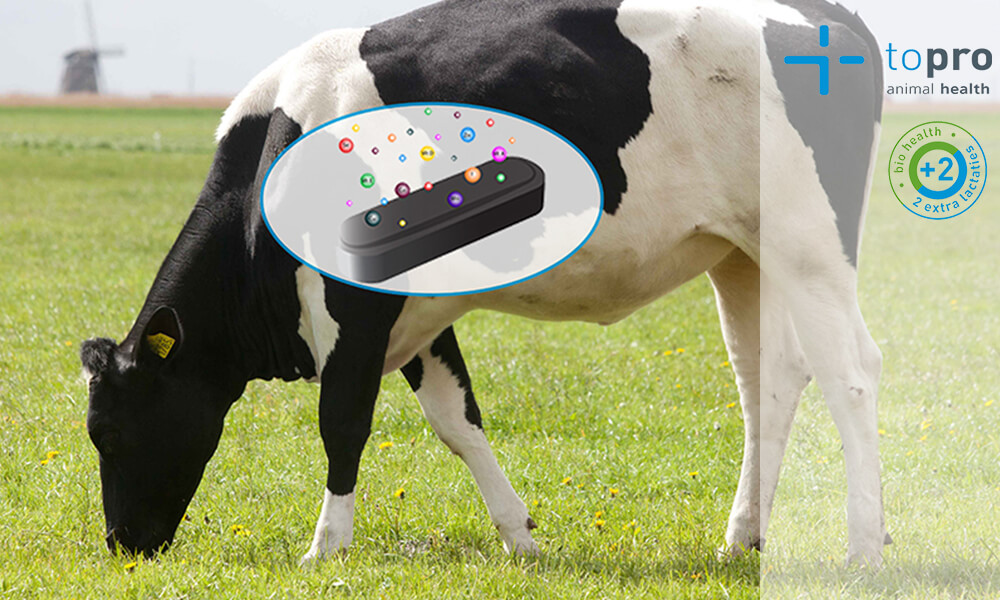
Aim for two extra lactations!

A Dutch dairy cow lasts on average more than three lactations and has a lifetime production of approximately 30,000 kg of milk. Replacement of dairy cows is not voluntary in seven out of ten cases; forced drainage can often be prevented by taking preventive action. The main causes of forced drainage are mastitis, hoof problems and reduced fertility. Preventive action is a good investment, because it can prevent many of these problems and extend the life.

We think along with you about every detail, because it's about details!

Free shipping

Free shipping from €100

Secure payment

simple and protected

Farming Forward magazine

Discover our new magazine “Farming Forward”, formerly known as “Cow Programme”. We have also added topics such as hoof care, hygiene and daily farm supplies.

Read the magazine
Farmula product catalogue calves & cows