Dairy cattle

8 June 2021

Calved; Why doesn’t my cow get up?

It still happens quite often, a cow that does not get into its legs after calving. Where is this now and how can we solve it? The phenomenon is called milk fever, and it is caused by a lack of calcium in the blood (hypocalcaemia).…

Read more

8 June 2021

Top athletes – The Dutch dairy cow

Our modern dairy cow passes through a cycle that contains risky phases. The transition period, often described as the last thirty days of gestation plus the first thirty days after calving – is such a hazardous period of time. During the transition from dry period…

Read more

8 June 2021

Aim for two more lactations

The lifespan of dairy cows is an important component of sustainability. The term ‘lifespan’ is commonly used to indicate the period between birth and end of life by natural causes at an older age, but nowadays – in our intensive agricultural systems – the lifespan…

Read more

8 June 2021

Tackling crypto in calves in 5 steps

Cryptosporidiosis is caused by Cryptosporidium spp. The most common type is C. parvum. Dutch research (2007) has shown that Cryptosporidium parvum is present on 57% of Dutch farms. Other research revealed that Cryptosporidia are involved in 60% of the cases of diarrhoea. Cryptosporidiosis is a…

Read more

8 June 2021

Prevention program decreases diarrhea

One outbreak of diarrhea in a heifer calf costs at least 150 euros per affected animal. During calf rearing it is important to keep the infection pressure on the farm as low as possible. Diarrhea is an often occurring health issue in young calves. Research…

Read more

8 June 2021

Prevention program decreases respiratory infections

In addition to diarrhea, pneumonia is the second largest cause of calf mortality. Calves that do survive still bring about extra expenses of 150 euros per calf. This amount includes treatment costs, later insemination, and reduced milk yield in the first lactation. Pneumonia in calves…

Read more

Topro Knowledge Base

The lifespan of dairy cows is an important part of the sustainability theme. The term "lifespan" is usually used to indicate a period that ends due to natural causes in old age. But today in our intensive farming systems, the cow's lifespan is significantly shorter than its potential. Currently, the average dairy cow lasts about three lactations.

Earn thousands of euros!

Earn Major steps can be taken in the field of sustainability, profitability and social acceptance. Financially, the benefits can amount to tens of thousands of euros per year! An important question, of course, is: in what way? Heifer-calf rearing, lactation start and lactation persistence are important components. Below is a calculation example and more information.

Aim for two extra lactations!

A Dutch dairy cow lasts on average more than three lactations and has a lifetime production of approximately 30,000 kg of milk. Replacement of dairy cows is not voluntary in seven out of ten cases; forced drainage can often be prevented by taking preventive action. The main causes of forced drainage are mastitis, hoof problems and reduced fertility. Preventive action is a good investment, because it can prevent many of these problems and extend the life.

We think along with you about every detail, because it's about details!

Free shipping

Free shipping from €100

Secure payment

simple and protected

Farming Forward magazine

Discover our new magazine “Farming Forward”, formerly known as “Cow Programme”. We have also added topics such as hoof care, hygiene and daily farm supplies.

Read the magazine
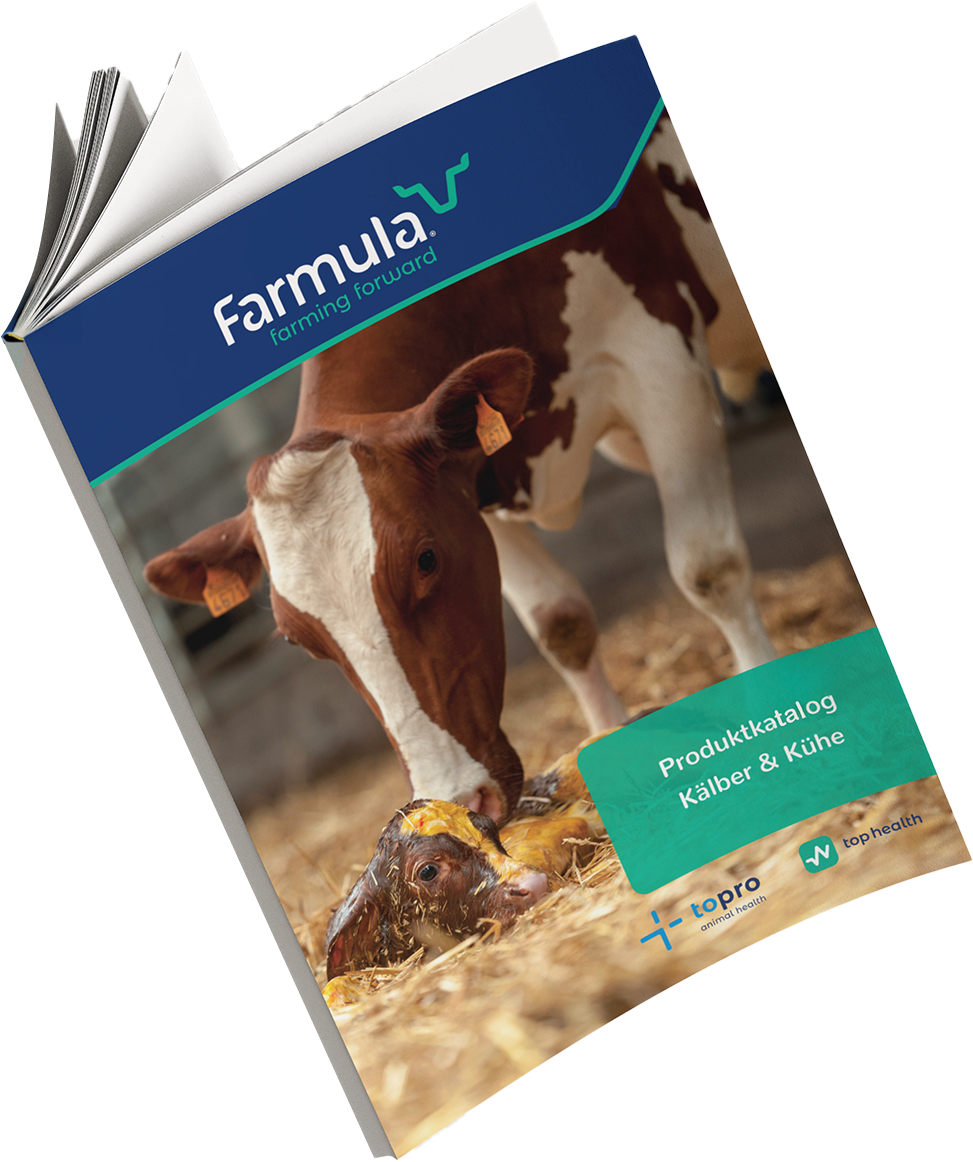
Farmula product catalogue calves & cows