 EN
 NL

Guide · Calcium
Why can’t my cow get up? Downer cow syndrome (phosphorus deficiency) in fresh cows
Phosphorus deficiency is becoming more common in dairy cows around calving. Even so, little is known about it yet. Because the cow…


In short
Feed rich in energy and protein, such as cereals, maize and meals, that supplements the forage.
Concentrate feed is feed with a high energy or protein density and little crude fibre. Unlike forage, it is usually bought in or used as home-grown cereal. A high-yielding cow cannot meet her needs from grass and silage alone, because her rumen only holds a limited volume. Concentrates close that gap.
On many farms the concentrate is part of the TMR. Then every cow gets the same mix. Often a partial mixed ration is made for an average yield and the rest is allocated by yield, through out-of-parlour feeders, in the parlour or in the milking robot. The out-of-parlour feeder has the advantage that cows in early lactation and high yielders get more where it is needed.
Small portions are better than large ones. A large amount of starch at once makes the rumen pH drop quickly. So spread the concentrate over several meals through the day. After calving, build it up slowly over two to three weeks so the rumen microbes can adapt.
There is no fixed limit. It depends on forage quality, the structure of the ration and the type of starch. For the rumen, the ratio of concentrate to structural roughage counts most. As a guide, at least 16 to 18 percent crude fibre in the dry matter of the total ration is used. Maize and wheat starch are broken down at different speeds. Wheat and barley ferment quickly, grain maize more slowly.
Signs of too much concentrate or too little structure are thin, yellow dung with undigested grains, few cows ruminating in the lying area and a fat-to-protein ratio below 1.0 in milk recording. Hoof problems often follow later.
In the dry period, little or no concentrate is fed so the cow does not get too fat. In the last two to three weeks before calving, a small amount gets the rumen used to the lactation ration. For heifers before calving it should be no more than 2 to 3 kg a day, because too much energy encourages udder oedema.
In hot weather, less concentrate is often better for the rumen, because cows ruminate less and lose buffer through panting. Read more in Heat stress in dairy cattle. At grazing, part of the minerals often goes missing along with the concentrate, as you can read in Grazing: keep a close eye on minerals.
Concentrate is often the largest bought-in cost. So calculate with the milk produced from forage. The better the silage and hay, the less concentrate the cow needs for the same yield.
That depends on yield and forage. High-yielding cows often get 6 to 12 kg, split into several small portions.
The rumen pH drops and rumen acidosis becomes a risk. The cow eats irregularly, the milk fat content falls and hoof problems become more common later on.
Hardly in the early dry period. In the last two to three weeks before calving, a small amount gets the rumen used to the lactation ration.
Phosphorus deficiency is becoming more common in dairy cows around calving. Even so, little is known about it yet. Because the cow…

In general, cattle on full grazing, cattle grazing in nature reserves and dairy cows that are not fed concentrates or extra minerals…
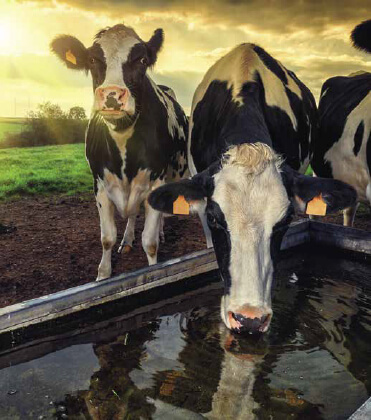
The warmer period of the year is here again; spring and summer. Cows can experience heat stress when the temperature is not…
Discover our new magazine “Farming Forward”, formerly known as “Cow Programme”. We have also added topics such as hoof care, hygiene and daily farm supplies.
Read the magazine

Cart

Your cart is empty.