A lamb’s first day is about one thing: colostrum. A lamb is born without antibodies in its blood and with only a small energy reserve. It gets both from the ewe’s colostrum. After that comes the question of whether the lamb drinks enough from the ewe, or whether you top it up with the bottle, the stomach tube or lamb milk replacer.
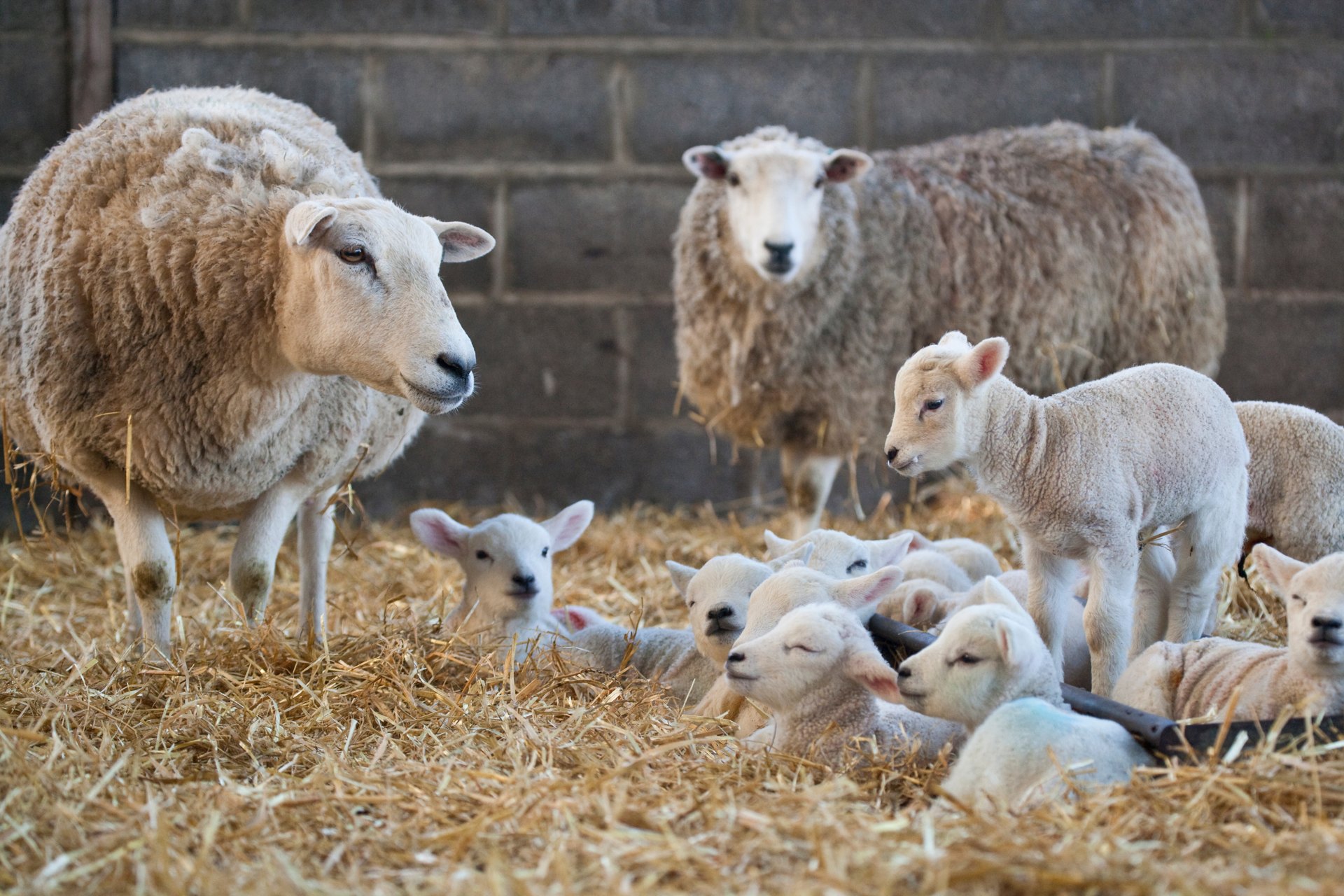
In practice we see that several lambs are often born at the same time. Work in a structured way then, so that every lamb gets colostrum. Often the sheep keeper does this personally, or the staff do it.
Why does a lamb need colostrum as soon as possible?
The gut of a newborn lamb absorbs the antibodies from colostrum best in the first hours. Every hour after that it works less well, and after about a day the gut hardly absorbs them at all. Colostrum is also the first energy: at birth a lamb has reserves for only a few hours to keep itself warm.
Give the lamb colostrum as soon as possible, ideally within 2 hours of birth.
How much colostrum does a lamb need?
Allow about 50 ml of colostrum per kilo of body weight per feed, and about 200 ml per kilo in the first 24 hours. In litres:
- A 5 kg lamb drinks about 250 ml per feed.
- A 5 kg lamb needs about 1 litre of colostrum in its first 24 hours.
- Split that litre over at least 4 feeds.
Is the lamb suckling from the ewe itself? Then strip a few squirts from each teat. This removes the plug from the teat and shows you whether colostrum is coming. Then check that the lamb is really sucking. A lamb that has drunk enough has a full belly and stretches when it stands up. A lamb with hollow flanks that keeps calling is hungry.
Which colostrum do you use if the ewe has too little?
With triplets, a young ewe or a ewe with little milk, there is not always enough colostrum. On sheep farms these sources are used, in this order of preference:
- Colostrum from the lamb’s own mother, milked out and given by bottle or tube.
- Colostrum from another ewe on your farm that has just lambed.
- Frozen sheep colostrum from your own farm.
- Cow or goat colostrum, ideally from your own farm or a farm you know.
- Colostrum powder, if there is nothing else.
Does the ewe give too little or no colostrum? That happens often. In practice we see that sheep keepers then use the 25 g sachets of colostrum powder as a complete colostrum feed, so without mixing them with the ewe’s colostrum.
Do you have colostrum, but only a little, or are you unsure of its quality? A colostrum supplement lets you complete the colostrum as best as possible. Follow the amount on the label.
Freeze colostrum in small portions, for example 250 ml, with the date on it. Thaw colostrum slowly in lukewarm water, not in the microwave and not in boiling water. Too much heat destroys the antibodies. Give the colostrum at about body temperature, around 39 degrees.
Bottle or tube: when do you choose which?
- Choose the bottle if the lamb has a sucking reflex, can lift its head and drinks by itself. When the lamb sucks calmly, the oesophageal groove closes: a fold that guides the milk past the rumen to the abomasum. So a bottle is preferred.
- Choose the tube if the lamb is too weak to suck but holds its head up by itself and still swallows. Or if you are not sure whether it has drunk enough.
- Give neither if the lamb is cold, lies flat and cannot lift its head.
Do not tube colostrum into a lamb that cannot lift its head. The swallowing reflex may be missing and the colostrum can end up in the lungs. Warm the lamb up first and talk to your vet.
How to tube feed a lamb
- Have a clean tube and bottle ready, and colostrum at about 39 degrees.
- Measure the length: hold the tube along the lamb from the mouth to the last rib and make a mark.
- Hold the lamb upright between your knees, with its head pointing straight forward.
- Slide the tube gently in through the corner of the mouth, over the tongue and backwards. The lamb swallows as you go. If it coughs, or the tube does not slide easily, pull it back and start again.
- Feel on the left side of the neck whether the tube is in the oesophagus. You will then feel two tubes next to each other: the windpipe and the stomach tube.
- Let the colostrum run in slowly by holding the bottle a little above the lamb.
- Pinch the tube closed and pull it back gently.
- Rinse the tube and bottle straight after use and leave them upside down to dry.
Give only colostrum or an electrolyte mix through the tube, never milk replacer. Milk given by tube ends up in the rumen and not in the abomasum.
Do not use the same tube for newborn lambs and sick lambs, so that no germs pass to a newborn lamb. Keep 2 separate tubes for this reason.
When is lamb milk replacer needed?
After the colostrum, most lambs keep suckling from the ewe. Lamb milk replacer is needed for triplets when the ewe has too little milk, for a ewe that does not accept her lamb, or for an orphan lamb. On many farms they first try to foster such a lamb onto another ewe. If that does not work, the lamb goes on the bottle.
A lamb that goes onto milk replacer also gets the colostrum of the first day first. A lamb that stays with the ewe but gets too little can be topped up with the bottle.
Mixing lamb milk replacer: make every feed the same
A young lamb’s digestion is used to a fixed rhythm: the same time, the same strength and the same temperature. If that changes from feed to feed, a lamb drinks less willingly.
- Check on the label whether the amount of powder is meant per litre of water or per litre of finished milk. That makes a difference in strength.
- Weigh the powder. A scoop does not always weigh the same. With scales, everyone who feeds makes the same milk.
- Use water at the temperature on the label and stir with a whisk until there are no lumps left.
- Feed the milk at about 39 degrees and check the temperature with a thermometer.
- Mix fresh milk for every feed. Germs grow fast in warm milk.
Lambs drink from the bottle, from a teat bucket or lamb bar with several teats, or from an automatic feeder. Some farms feed warm milk a few times a day, others offer cold milk freely once the lambs are used to the teat. How much milk a lamb gets per day and how you build that up depends on your farm. Discuss the feeding plan with your feed advisor.
Teach a lamb to drink by holding it calmly, putting the teat in its mouth and helping it during the first days. Hang the bottle or teat bucket so that the lamb drinks with its head up, as it does from the ewe. After every feed, rinse teats, bottles and buckets first with lukewarm water and then wash them with hot water.
Put out fresh water next to the milk as well!
Milk is food, not drinking water. Lambs already drink water in their first week if it is available. From the first week, put fresh water, good hay and lamb creep feed in the pen. In winter it is a good idea to check daily that the water has not frozen.
Read more about sheep in the category Sheep and in our article Minerals for sheep.
Frequently asked questions
Can I give cow colostrum to lambs?
Yes, if there is no sheep colostrum. Colostrum from the lamb’s own mother or from another ewe remains the first choice.
How long can I freeze colostrum?
Frozen colostrum keeps for about a year. Freeze it in small portions, so you only thaw what you need.
Can I thaw colostrum in the microwave?
Better not. In the microwave, colostrum gets too hot in places and antibodies are lost. Thaw colostrum slowly in lukewarm water.
Can I boil the bottle or tube?
Sheep keepers ask us this. Whether you can boil the bottle and tube depends on the material: check the instructions for use. In any case, rinse them straight after use with lukewarm water first, then wash them with hot water and leave them upside down to dry.
How often do I tube feed a weak lamb?
As long as the lamb does not suck by itself, split the colostrum for the first 24 hours over at least 4 feeds of about 50 ml per kilo. Before each feed, first try whether the lamb will drink from the bottle.
Can I give calf milk replacer to lambs?
Sheep’s milk has a different composition from cow’s milk. So use milk powder that is made for lambs and follow the label.
Sources
- Nowak, R. and Poindron, P. (2006). From birth to colostrum: early steps leading to lamb survival. Reproduction Nutrition Development 46, 431-446.
- Dwyer, C.M., Conington, J., Corbiere, F. et al. (2016). Invited review: Improving neonatal survival in small ruminants: science into practice. Animal 10(3), 449-459.
- AHDB Beef & Lamb. Reducing lamb losses for better returns. Better Returns Programme.
Recommended products

Gut health · Lambs goat
The right milk replacer matters for optimal growth of lambs. In the first weeks lambs build more muscle mass, which increases their need for a good protein source. Trace elements…
€18,95 excl. VAT (21%)

Resistance · Sheep
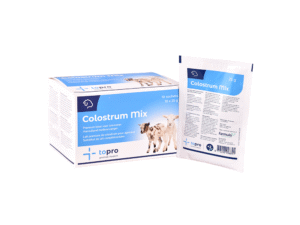
A good colostrum supply is vital for calves and lambs. In the first hours after birth they absorb immunoglobulins (antibodies) through the gut wall. These are essential for immune defence…
€49,50 excl. VAT (21%)

Necessities · Lambs sheep
Lambar, consisting of a 2-compartment bucket and 6 soft teats with non-return valve. The lambar is made of plastic and intended for feeding lambs.
€11,45 excl. VAT (21%)

 EN
 NL