EN
EN  NL
NL 


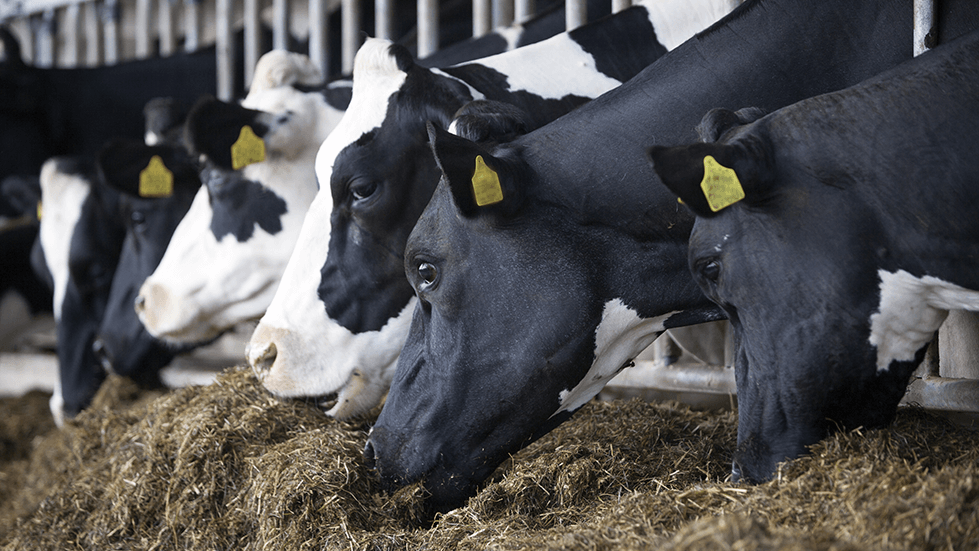
On dairy farm De Boer in Grijpskerk, Kor de Boer milks around 140 dairy cows together with his brother and son.
In recent years the focus has been on better calf rearing, which results in better and stronger heifers.
The cows are currently milked with 2 milking robots, and since the start of this year a third feeding station has been added at the robots. With it, Kor wants to steer transition and feed intake even more tightly. KetoCare helps with that: cows take it readily, energy dips after calving no longer occur and production goes up. “You see it straight away in a more stable start and more milk,” says Kor.
From propylene to something they actually like
Until recently, Kor used propylene in the first period after calving. But he kept running into the same problem. “It wasn’t palatable. Cows just walked off when I came over with
the dosing gun. You want them to take it, not to turn it into a fight.”
KetoCare came up through his brother-in-law. “He used it in the Multidos and was very happy with it. To be honest, I thought it was too expensive and mainly looked at the price.” That changed when he noticed that heifers in particular were short of energy after calving. “They needed a boost. So I gave it a try after all.”
First the heifers, then as standard for the first 60 days
Kor started with KetoCare on the heifers: 100 ml per cow per day for the first 40 days after calving. “To my surprise they did really well. They went straight to 35+ litres.”
When he stopped after 40 days, the effect showed right away. “Production dipped. That was the proof for me. Since then I give it as standard for 60 days, to all fresh cows.”
Shiny cows, plus litres in the tank
According to Kor, a big advantage is that cows take KetoCare readily. “They like the taste, so you have no hassle giving it, a world of difference from propylene.” And you see that in the milk yield. “Where we used to be happy with 40 litres, we now see 50+ litres. With peaks up to 65 litres. You can tell they really do something with the energy, and the cows have a nice shine on their coat. That tells me enough.”
Price versus result
Kor is honest about his initial doubts. “I often look at the price first. KetoCare is not the cheapest.” But that view has changed. “KetoCare does what it says and is more than
just energy. In the end, what counts is what it delivers: fewer problems, a better start and more milk. I’m very happy with it.

Lactation curve of heifers using KetoCare: 100 ml per cow per day for the first 60 days. After that, milk production fell, probably as a result of stopping KetoCare.