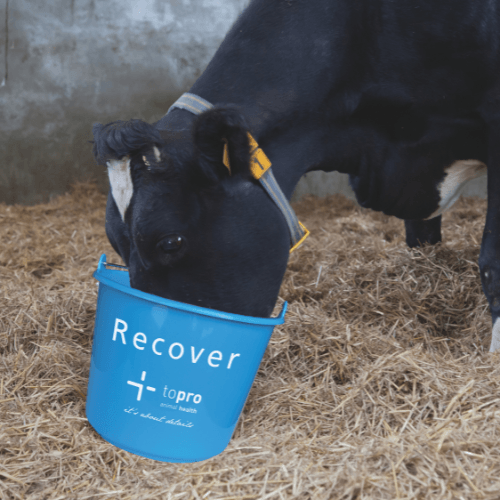
Drenching is mainly used to give cows fluid in order to counteract dehydration. Using a hose and a stomach tube, fluid is pumped directly into the rumen. Besides water, extra nutrients such as energy, vitamins and minerals can also be given.
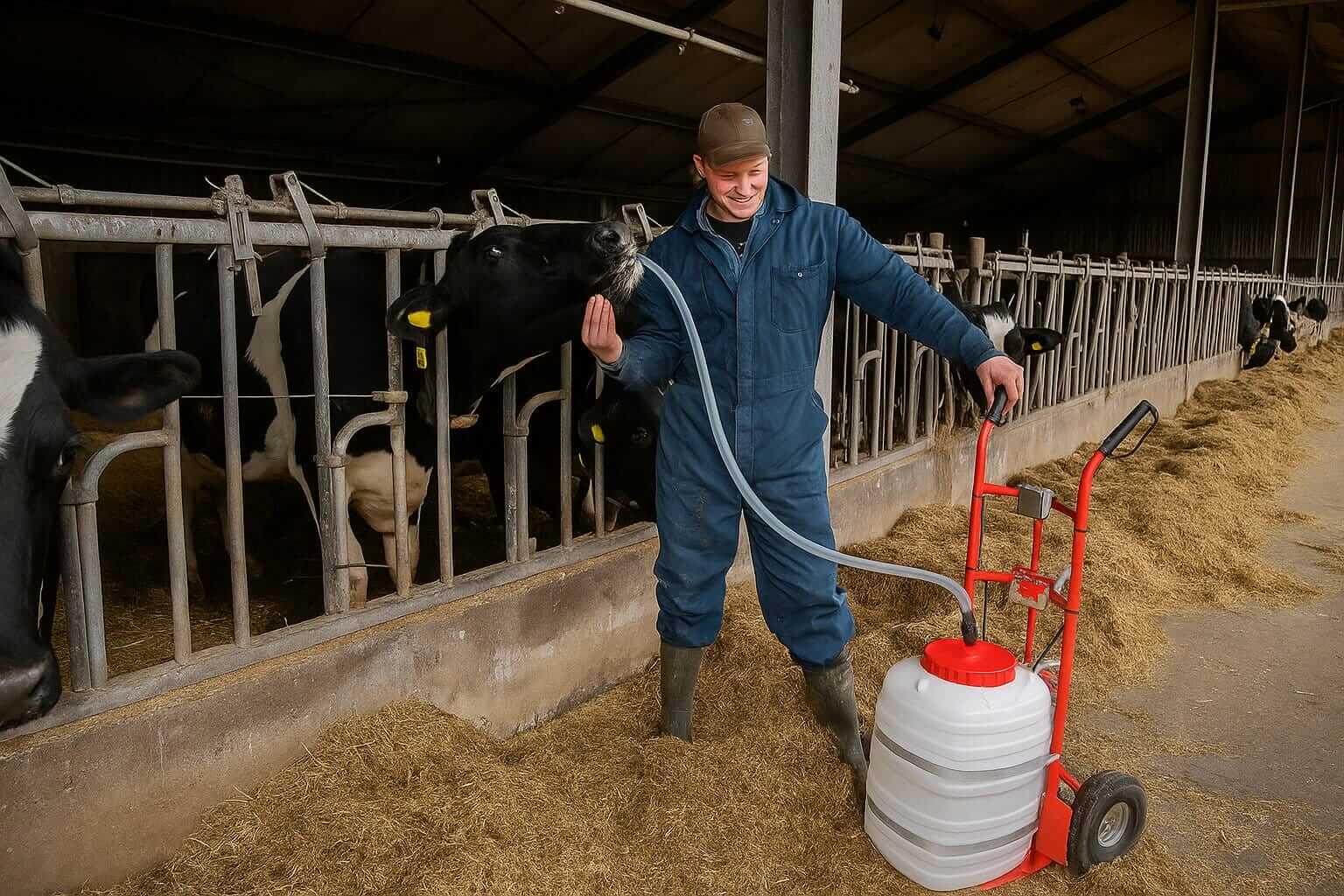
Especially around calving and in cows with reduced feed and water intake, drenching can be valuable support. But when does it make sense to drench a cow? How many litres of fluid should be given, and how often can the treatment be repeated?
When should you drench a cow?
In principle, drenching can be used for cows that are at risk of dehydration or do not take in enough fluid. There are several signs of this:
- Drop in milk yield
- Cold ears
- Sunken eyes
- Delayed skin fold test
- Reduced feed and water intake
Sick and freshly calved cows in particular have a higher risk of dehydration. In freshly calved cows, drenching can also be used preventively to support fluid supply and rumen fill around calving.
The extra fluid promotes rumen fill, and the cow can be encouraged to eat more again. Good feed intake is important to prevent an energy and mineral shortage, and can help to lower the risk of a displaced abomasum.
Cows recovering from a surgical procedure, or suffering from gut problems or other conditions, can also benefit from extra fluid. For example, drenching can be used in a cow with an inflamed udder to support the fluid supply as a supplement to the treatment of the underlying condition.
These effects can be supported by adding extra nutrients. Energy, vitamins, and macro and trace minerals are valuable components of complementary feeds here.
How many litres of water should you give a cow when drenching?
The amount of fluid a cow needs depends on her body weight, how dehydrated she is and how much water she has already drunk herself.
In practice, adult dairy cows are often given 40 to 60 litres of lukewarm water per treatment. Smaller amounts can also be enough if a cow only needs limited extra support.
It is important to match the amount of fluid to the individual cow. When adding drench products, always follow the prescribed dosage and mixing ratio.
How often may you drench a cow?
How often a cow should be drenched depends on the animal’s health status and the aim of the treatment.
In freshly calved cows, a single treatment can be enough. If the cow still does not drink or eat enough afterwards, a repeat treatment may be needed.
In cows with gut problems or increased fluid loss, it may be necessary to support the fluid supply more often.
There is no fixed frequency that suits every cow. So each animal should be assessed individually to decide whether a repeat is needed, preferably in consultation with the vet. If a cow still eats or drinks poorly after drenching, it is important to find out the underlying cause.
What can you use to drench a cow?
For drenching, a special drench pump is used, which delivers fluid into the rumen through a hose and a stomach tube.
Depending on the use, you can choose between an electric drench pump and a battery-powered drench pump.
The Drench It electric pump has a 50-litre tank and delivers fluid without manual pumping. With the Drench It battery pump, this is also possible in places without a direct power connection.
Discover our Drench It electric pump and the Drench It battery pump.
Benefits of drenching for the animal
- Support of the fluid balance ↑
- Stimulation of rumen function ↑
- Support of feed intake ↑
- Promotion of rumen fill ↑
- Improvement of the cow’s wellbeing ↑
Benefits of drenching for the farm
- Efficient individual treatment
- Control over the amount of fluid given
- Targeted delivery of extra nutrients
- Cows get used to the treatment
Drenching: step by step
To drench safely, it is important to carry out the treatment carefully. Inserting a stomach tube requires sufficient knowledge and experience.
- Fill the tank with the required amount of lukewarm water.
- Add the chosen complementary feeds according to the prescribed dosage.
- Restrain the cow securely, without tying her head up.
- Insert the stomach tube carefully and secure it with the nose clamp.
- Insert the hose and fasten it securely.
- Check carefully that the hose is correctly positioned in the oesophagus and the rumen. A smell check alone is not enough for this.
- Connect the hose to the tank and start the pump once the correct position has been confirmed.
- Hold the hose up when removing it and prevent fluid from running back.
It is recommended to watch the drenching continuously. If the cow starts to cough, brings fluid back up or shows signs of breathing problems, the drenching must be stopped immediately. Check the position of the tube and, if in doubt, call in a vet.
After drenching, remove the hose and the stomach tube properly. Then clean and disinfect the drenching equipment and the tank thoroughly.
To illustrate, below is a video in which our Drench It electric pump is used.
Frequently asked questions
What is drenching?
When drenching, fluid is given to a cow directly into the rumen with a pump and a stomach tube. Usually this is 40 to 60 litres of lukewarm water, often with energy, minerals or vitamins. This way a cow that drinks too little quickly gets fluid and good rumen fill.
When should you drench a cow after calving?
Ideally in the first hours after calving, if the cow does not drink and eat well on her own afterwards. Many farms also drench freshly calved cows preventively to stimulate rumen fill and feed intake.
Can anything go wrong when drenching?
Yes. If the hose is in the windpipe instead of the oesophagus, fluid gets into the lungs. So check the position of the tube carefully and stop if the cow coughs or shows shortness of breath. Have the vet show you the technique the first time.
Recommended products

Gut health · Cattle
Topro Rumen Drench is a complementary diet feed for dairy cows to support rumen and liver function and to reduce the risk of dehydration. Optimal functioning of a cow's rumen…
€95,55 excl. VAT (21%)


Necessities · Cattle
The Drench It Mobile is a handy, user-friendly and efficient mobile drencher. Thanks to the electric pump, you can quickly and without physically strenuous effort administer moisture and nutrients into…
€525,00 excl. VAT (21%)

Necessities · Cattle
The Drench It Mobile Accu is a user-friendly, efficient and battery-powered mobile drench. Thanks to the electric pump, you can give fluid and nutrients into the rumen of the ruminant…
€725,00 excl. VAT (21%)

 EN
 NL