EN
EN  NL
NL 

Rumination as an indicator
Rumination looks like calm behaviour, but it is actually a quick check of rumen health. During rumination, feed particles are broken down further, so rumen microbes can digest the ration more efficiently. Rumination also produces a lot of saliva: a natural buffer that helps stabilise rumen pH. When rumination drops, buffering often drops too and rumen pH can fall, resulting in lower feed intake and a less stable start to lactation. The literature describes the same mechanism: less rumination means less buffering, and a lower pH is linked to falling intake.
Calving: the vulnerable turning point
At calving, the cow loses a lot of fluid and electrolytes. At the same time, calcium levels drop and feed intake often falls short of requirements. That creates a risk of weakness and listlessness: the cow comes to the feed fence less quickly, so the rumen can “go quiet” and rumination minutes lag behind. In that phase you want one thing above all: to fill and activate the rumen again quickly, so intake and rumination return fast.
Cow drinks: from fluid to appetite (and rumination)
Cow drinks are aimed at exactly those first hours: lukewarm water helps get digestion, metabolism and appetite going. Water intake also fills the rumen (which also helps limit abomasum problems), and extra energy or calcium in the drinking water can be useful for cows that are “slow” to get started.
What does research show?
In a study with a voluntarily consumed calcium-energy drink (20 litres within 3 hours after calving), acceptance was clearly higher than with a placebo (81% vs. 50%). The production effects were small but positive (+0.08 kg milk/day; +40 g protein/day), and ketosis prevalence in the first 30 days was lower (15.1% vs. 19.5%). If voluntary drinking does not work, drenching is also used in practice. In a study with twice 20 litres (containing calcium propionate, magnesium sulphate and potassium chloride, among other things), NEFA/BHB dropped (less negative energy balance) and the cell count (SCC) was lower, although milk yield and hydration did not change.
In practice: timing is everything
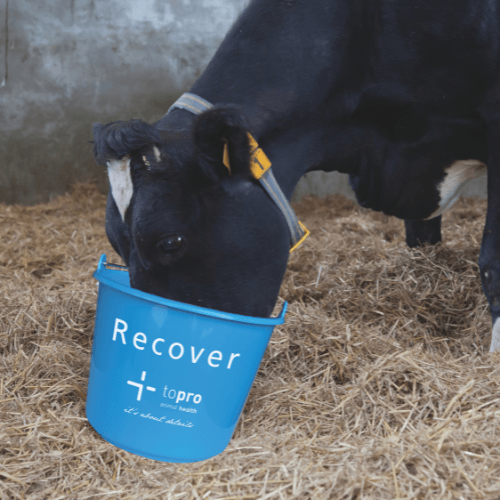
If you want an effect on start-up and rumination, it has to happen quickly and fit into the routine. In the Recover field study, farms saw that offering the Recover start-up drink ‘later’ was more often linked to lower (complete) intake.
Practical tips at the feed fence
Offer the cow drink lukewarm, as soon as possible after calving, and watch rumination minutes extra closely in the first 3 days: it is often the earliest signal that the rumen is not (yet) working properly.
Effect of Topro Recover on rumination
Topro Recover is a cow drink that combines dextrose/sweet whey powder, calcium, sodium salts, potassium, vitamins (A, D3, E), niacinamide and selenium, among other things. One sachet (1 kg) goes into 20 litres of lukewarm water (±38 °C) and is offered as soon as possible after calving. In the field study, 80% drank the whole drink; of the complete intakes, 69% were offered it within 15 minutes, so timing turned out to be key. These cows showed higher rumination activity in the first week, with significant differences on days 2 and 3. In practice, voluntary intake (helped by the melon flavour, among other things) is also reported to approach 93%.