 EN
 NL
Guide · Calves
Feeding milk to calves after the colostrum period: how to make every feed the same
Milk replacer or whole milk: after colostrum, small differences in strength, temperature and hygiene add up. Here is how to make every…


Winter is making itself felt, cold days and nights with high humidity lower the perceived temperature. Calves notice this too. Calves generally cope well with a bit of cold, but you still need to watch out for hypothermia. Calves that are cold have their hair standing up and may shiver. This can weaken their resistance, and the calf has a higher risk of diarrhoea or pneumonia. With these tips, your calves will get through the cold days warm.
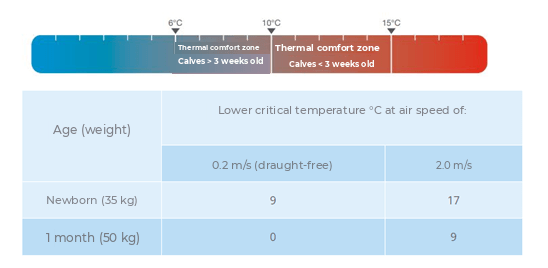
The temperature at which you need to pay extra attention to hypothermia in calves depends on the age of the calves and on the humidity and wind speed in the calf barn. Calves younger than 3 weeks in particular are the most vulnerable to temperature swings and can quickly suffer from the cold, even at a temperature of 10°C (at night). Calves older than 3 weeks regulate their body heat better and need extra support below 6°C, provided there is no draught.
When a calf is born, it moves from a warm uterus of around 38.5 °C to a fresh barn environment. A healthy calf is good at regulating its body heat, especially if the cow licks the calf quickly and helps dry it off. A wet calf can cool down fast, especially in a draught.
Calves that have already had a hard start also cool down faster. Examples are calves that were too heavy at birth, twins, or calves from weak cows. Cows short of energy, protein and trace elements can give birth to weaker calves and produce colostrum with less energy and fewer antibodies. Calves from well-fed cows use up their reserves more slowly and cope more easily with critical periods.
It is also important on cold days to give the calf colostrum straight away. The absorption of antibodies and energy drops as the calf’s body temperature falls. That energy then cannot be used to keep the calf warm, and the antibodies cannot protect the calf well enough against infections and disease. Does the calf still not feel warm enough afterwards? Then feed the leftover colostrum to the calf at the 2nd or 3rd milking.
First of all, make sure there is no draught in the calf barn. It sounds obvious, but it is the main reason calves get cold in the calf pen. At the same time, keep an eye on getting enough fresh air into the barn. So be critical of the barn climate, especially on these cold days.
Calves also need to lie dry, with enough straw in the pen. Straw is perfect for winter, as it holds heat better than, for example, sawdust or sand. There does need to be enough straw in the pen: as a rule of thumb, the hind legs should no longer be visible when the calf lies in the straw.
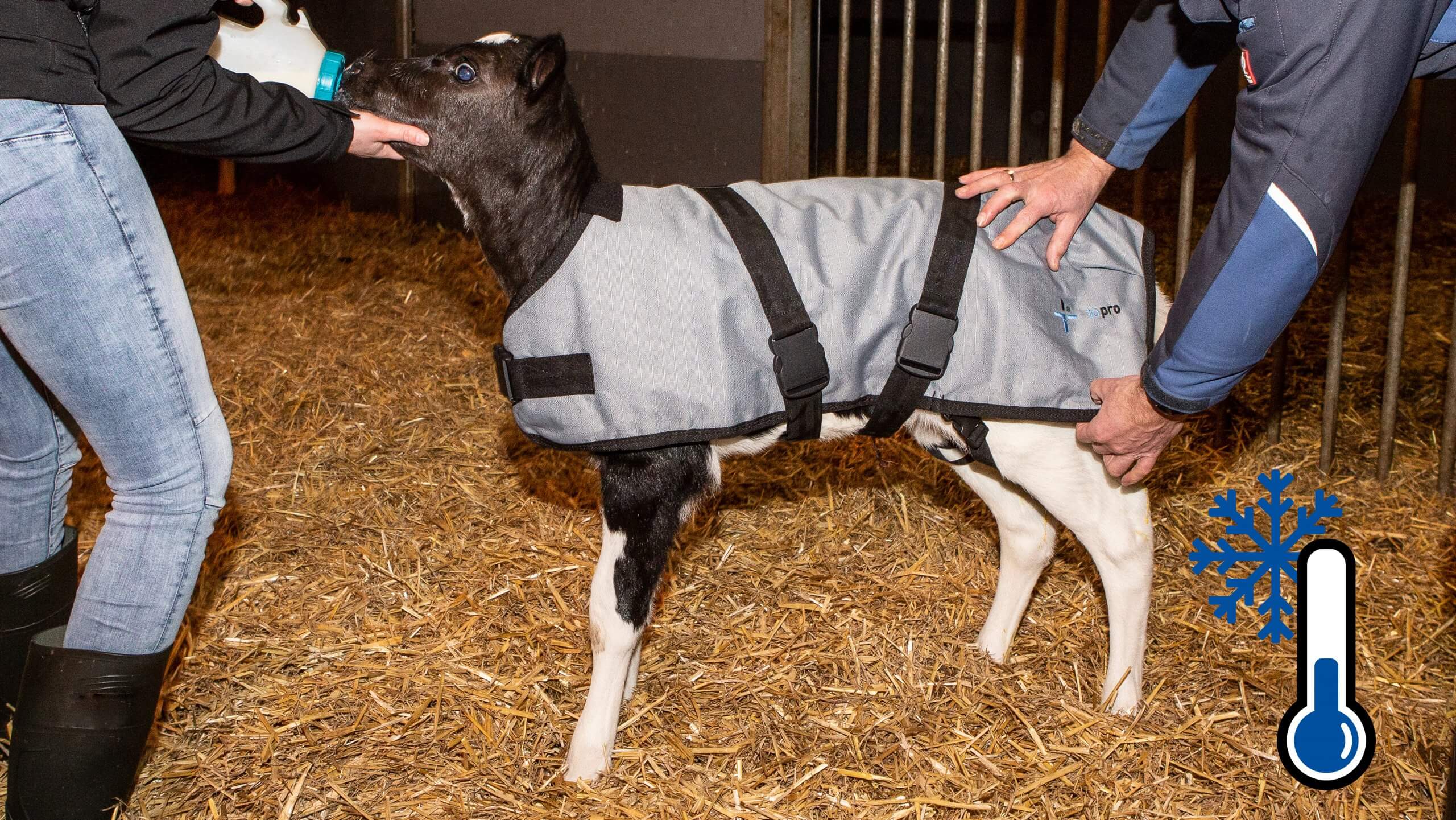
Calf jackets can add value, especially for calves younger than 3 weeks. Calf jackets have been shown to contribute to better feed efficiency. Calves that are cold need more milk to get more energy to keep themselves warm. These calves use more (replacer) milk but do not grow or develop any better!
On cold days you can raise the milk powder concentration slightly (by about 10%) to give calves extra energy. You can also add a 3rd milk feed, for example giving milk at midday instead of water. Feeding generously pays off, provided the milk has the right composition. It is also important that calves, especially older calves, always have unlimited access to roughage and water. In the morning, check that the water bowls are not frozen.
Calf jackets can reduce energy loss. That makes it worthwhile to put a calf jacket on calves from day 1. The calf must be dry first, otherwise it can get cold after all. You can keep a wet calf warm with a heat lamp.
When using calf jackets, check carefully that the jacket fits well, so the calf is covered from neck to tail. Adjustable straps are also handy for refitting the jacket as the calf grows.
Milk replacer or whole milk: after colostrum, small differences in strength, temperature and hygiene add up. Here is how to make every…

Choosing the right teats for your calves can be complicated. After all, there are so many teats and systems on the market!…

In this period with relatively cold and damp weather, dairy farmers need to keep a close eye on the health of their…
Discover our new magazine “Farming Forward”, formerly known as “Cow Programme”. We have also added topics such as hoof care, hygiene and daily farm supplies.
Read the magazine

Cart

Your cart is empty.