
 EN
EN  NL
NL 

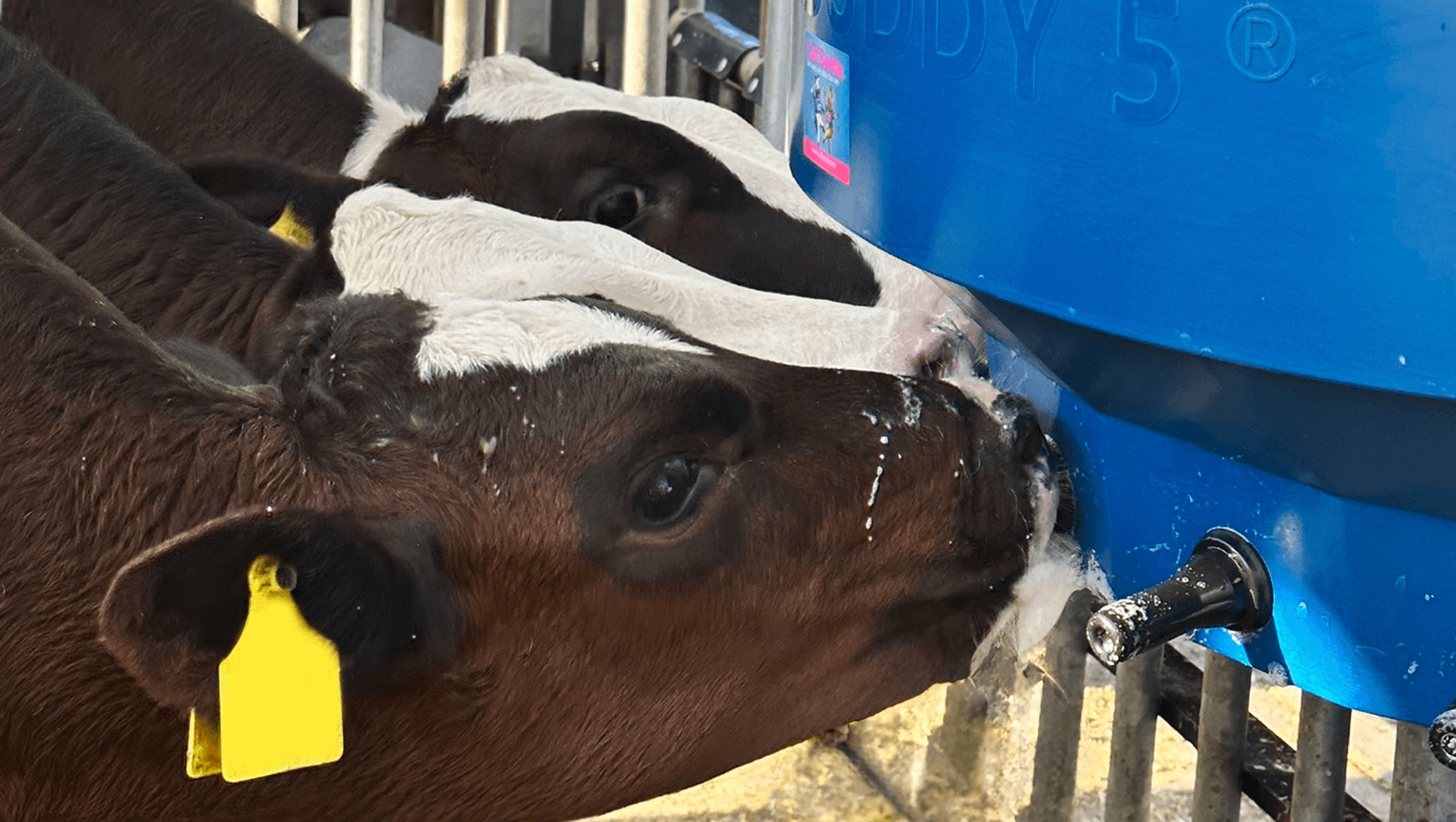
The type of teat in the teat bucket affects calf health
In the Netherlands there are generally 3 ways of feeding milk to calves:
- Teat bucket
- Bucket/trough
- Milkbar
When you look at what stimulates the calf’s digestion, it is important that the calf can suck on a teat. Sucking triggers the oesophageal groove reflex: the oesophageal muscles contract so that milk flows straight into the abomasum. Factors such as sucking behaviour, warm milk, head position and stress affect this reflex.
Incorrect feeding regimes, such as cold milk drunk at high speed, can stop the oesophageal groove reflex from working properly, so milk ends up in the rumen. For young newborn calves this is usually not a problem, but in calves of 2 to 3 weeks and older that have rumen microflora, large amounts of milk in the rumen can cause trouble. In the rumen, the milk sugar can be converted into organic acids and the proteins will putrefy, which changes the rumen microflora. This can then lead to digestive disorders, diarrhoea and reduced growth.
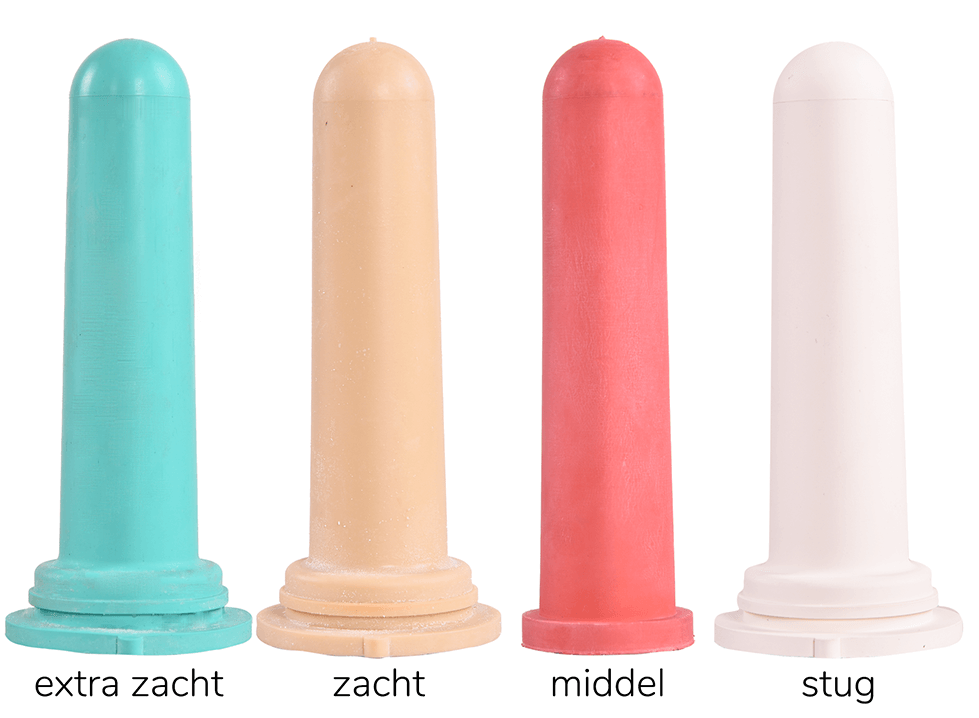
Different types of Hiko teats, ordered from soft to firm. The teats fit calf feeding bottles and teat buckets. The blue teat is very well suited for giving colostrum to newborn calves (with a calf feeding bottle). After that you can move on to the brown teat, red teat and white teat.
Choosing teats: a balance between milk flow and practicality
A calf teat has to meet the sucking needs of the calf, depending on its age. A popular choice is the soft silicone teat. This teat mimics the natural texture of the mother’s teat, so young calves accept it more easily and can drink the milk with less sucking effort. Calves of one or two weeks old suck harder, so a firmer teat or a teat with a smaller opening suits them better. This lets the calves drink in a calmer and more controlled way, which prevents colic and optimises nutrient intake.
There are also teats with a cross-shaped and a round opening. Both have their advantages.
Round opening
- Even milk flow: The round teat generally gives an even milk flow, which suits automatic calf feeders.
- Simple design: The simple round hole minimises the risk of blockages and makes it a practical choice for younger calves.
Cross-shaped opening
- Controlled milk supply: The cross-shaped hole regulates the milk supply and is ideal for calves that need a more measured drinking experience, especially older calves prone to overdrinking.
- Slower drinking: The cross-shaped design encourages slower drinking, which can benefit digestion and help prevent possible problems such as colic.

It is important for livestock farmers to know what each calf needs and what fits the farm’s system. Regularly watching how the calves drink and changing teats where needed can help optimise calf rearing.


