 EN
 NL
Guide · Udder
Mastitis in cows: how to recognise it, its causes and what you can do yourself
Mastitis is the most expensive disease on a dairy farm. A clinical case easily costs 300 to 500 euros through lost milk,…


At a glance
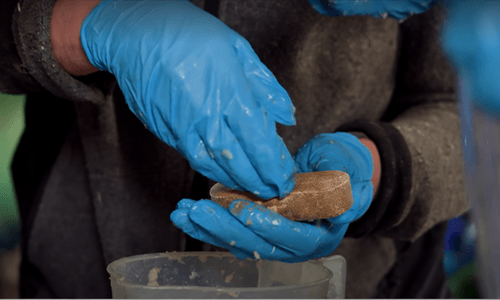
Almost every month, a few hundred dairy farmers in Germany search for “make a garlic bolus yourself”. The question makes sense. Garlic is cheap, everyone knows its effect from the kitchen, and a bolus for 20 euros seems expensive for something you could press yourself. In this article we work out honestly what a homemade garlic bolus requires, where it goes wrong and what a ready-made bolus does differently.
Allicin is a natural sulphur compound from garlic that is known for its strong antimicrobial effect. It forms when a garlic clove is crushed, cut or pressed. Alliin and the enzyme alliinase then come into contact with each other and allicin is formed. Allicin can enter bacteria and disrupt important enzyme processes. This inhibits their activity and slows the growth of harmful bacteria. Our article Wie wirkt der Knoblauch-Bolus? explains this in detail.
There are two forms: unprocessed allicin and stabilised garlic compounds. The main difference lies in stability and duration of action.
Unprocessed allicin is chemically very reactive. After it forms, it quickly breaks down into various sulphur compounds. Some of these remain active, others are less active. That is why the amount of allicin in garlic preparations (liquid, powder or tablet) can drop sharply over time.
Stabilised garlic compounds such as PTS and PTSO are derivatives of the sulphur compounds from garlic. They are more stable and therefore better suited for processing into a slow-release bolus.
For a homemade bolus this means: what you press today may already contain much less allicin tomorrow. A ready-made bolus with stabilised garlic compounds gives you more control over composition and release.
A worked example. A garlic clove of 4 grams contains about 10 mg alliin. Pressing turns this into around 4 mg allicin (conversion rate 0.45). If a bolus is to contain 150 mg allicin, roughly the amount of active substance in a commercial bolus, you need:
For one cow that needs 21 days of support, or for five cows at the same time, this adds up to kilos of garlic per week. Peeling, pressing, mixing and administering. Every day again, see problem 1.
A bolus works because it stays in the rumen and releases its contents slowly. That requires a carrier that is heavy enough not to be spat out or move on, and that dissolves at a controlled rate. A homemade mass of garlic and a binder falls apart in the rumen within hours. The active substance is released all at once, or not at all, and is gone the next day. How a ready-made bolus is given is described in our frequently asked questions about boluses.
Fresh garlic in large amounts can lead to off-flavours in the milk via the blood. Dairies check for this and can reject milk with an off-flavour. With stabilised garlic boluses this is different. The stabilised sulphur compounds are less reactive, so the risk of off-flavours in the milk is limited.
Stabilised garlic boluses contain two derivatives of allicin: PTS (propyl propane thiosulfinate) and PTSO (propyl propane thiosulfonate). These substances are obtained from garlic through a water-based extraction process. Laboratory studies show that PTS and PTSO can limit the growth of certain bacteria, including S. aureus and E. coli.
What this brings in practice:
In a field trial with Van Hall Larenstein University of Applied Sciences (2021, 12 cows), conductivity dropped by 17 percent on average after a stabilised garlic bolus and milk yield rose by 12 percent. You can read how the trial was set up here: Leitfähigkeit mit Knoblauchbolus reduzieren. A scientific study from 2023 also showed positive results with a garlic bolus and an anti-inflammatory: a lower cell count and lower conductivity.
You will find an overview of stabilised garlic boluses in our udder health category.
Garlic powder contains practically no allicin any more. It brings smell and taste, but not the effect you use it for.
One bolus per cow. When the cell count is rising sharply, a garlic bolus with 3 days of release is often given first, and after three days one with 3 weeks of release for longer support. If in doubt, talk to your vet or to us. How to proceed step by step when the cell count rises is explained in Hohe Zellzahl senken ohne Antibiotika.
No. The bolus is a complementary feed, not a medicine.
Mastitis is the most expensive disease on a dairy farm. A clinical case easily costs 300 to 500 euros through lost milk,…
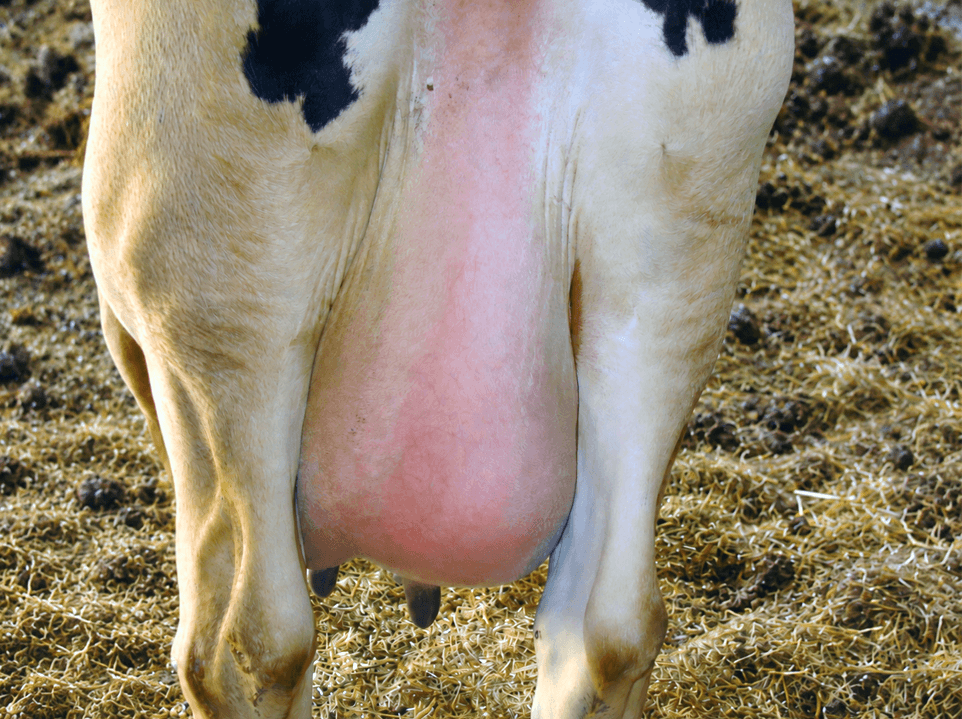
A heifer whose udder stands tight and shiny a week before calving, with a thick ridge of fluid in front of the…
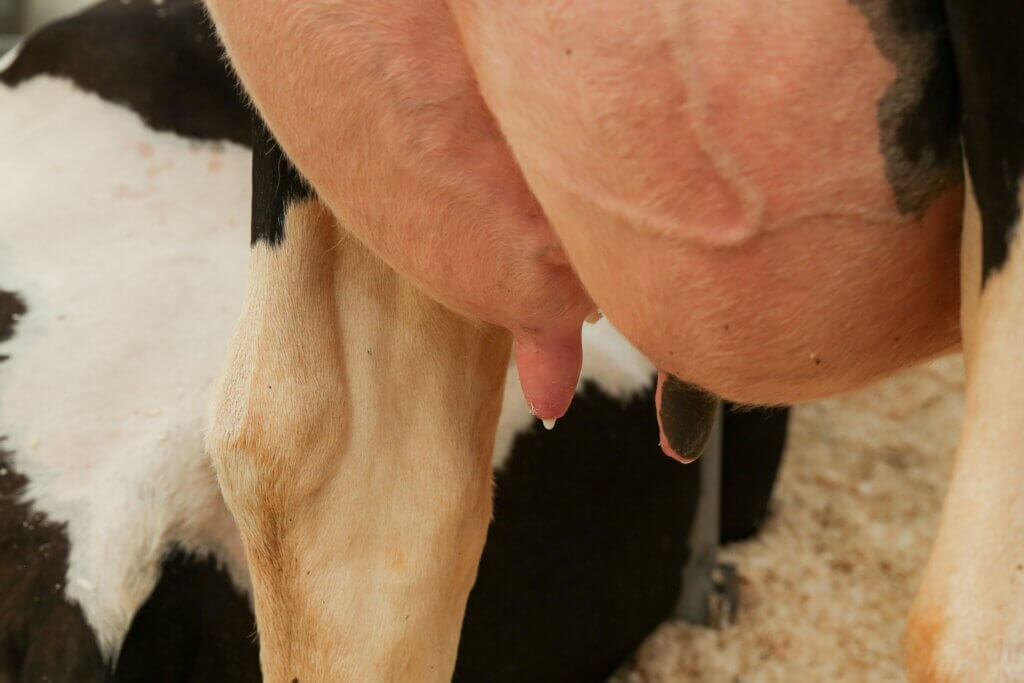
A bulk tank cell count that climbs from 150,000 to 280,000. A milk recording report with eight cows above 250,000. Or an…
Discover our new magazine “Farming Forward”, formerly known as “Cow Programme”. We have also added topics such as hoof care, hygiene and daily farm supplies.
Read the magazine

Cart

Your cart is empty.