
 EN
EN  NL
NL 


Make a fly plan for 2024 now to stay ahead of fly problems
We need to move away from livestock farmers only taking action against flies once the problem is actually there. That is from April/May through to September/October. On a modern, professional livestock farm there should be no fly problems at all. Animal welfare, productivity and health are at stake.
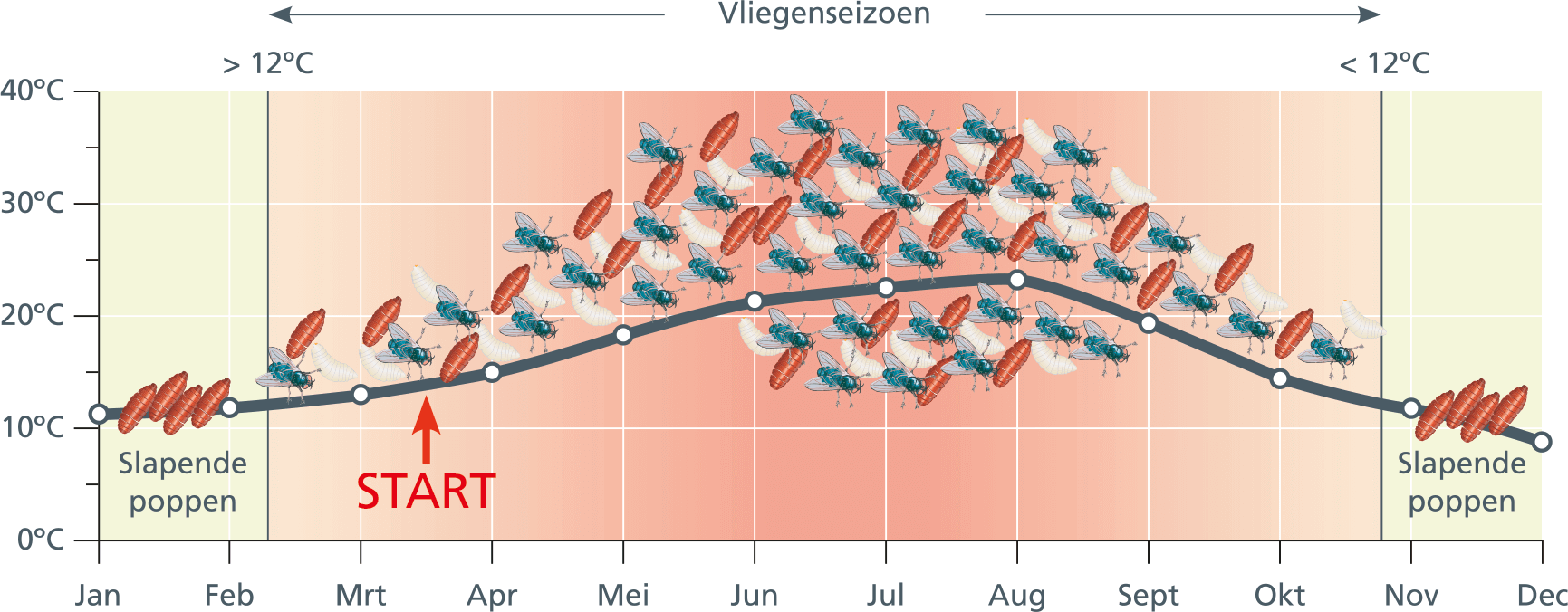
The fly season starts as early as April and peaks in the summer months, tailing off into autumn. The pest fly population starts to multiply once the temperature rises above 12 degrees.
Biological fly control means using natural enemies to keep the pest fly population down. Biological fly control is nothing new, but it is still hardly used in cattle farming. Why not? Cattle barns can be more complex than pig houses, where biological fly control is more established. Over the years, techniques have been developed further and more knowledge has been gained to make biological fly control possible in open barns.
The 4 stages of the pest fly
To understand what predatory flies and parasitic wasps do, it helps to know the life cycle of the pest fly. As you may know, it has four stages: adult fly, egg, larva and pupa. Unlike chemical products, biological methods can tackle all of these stages.
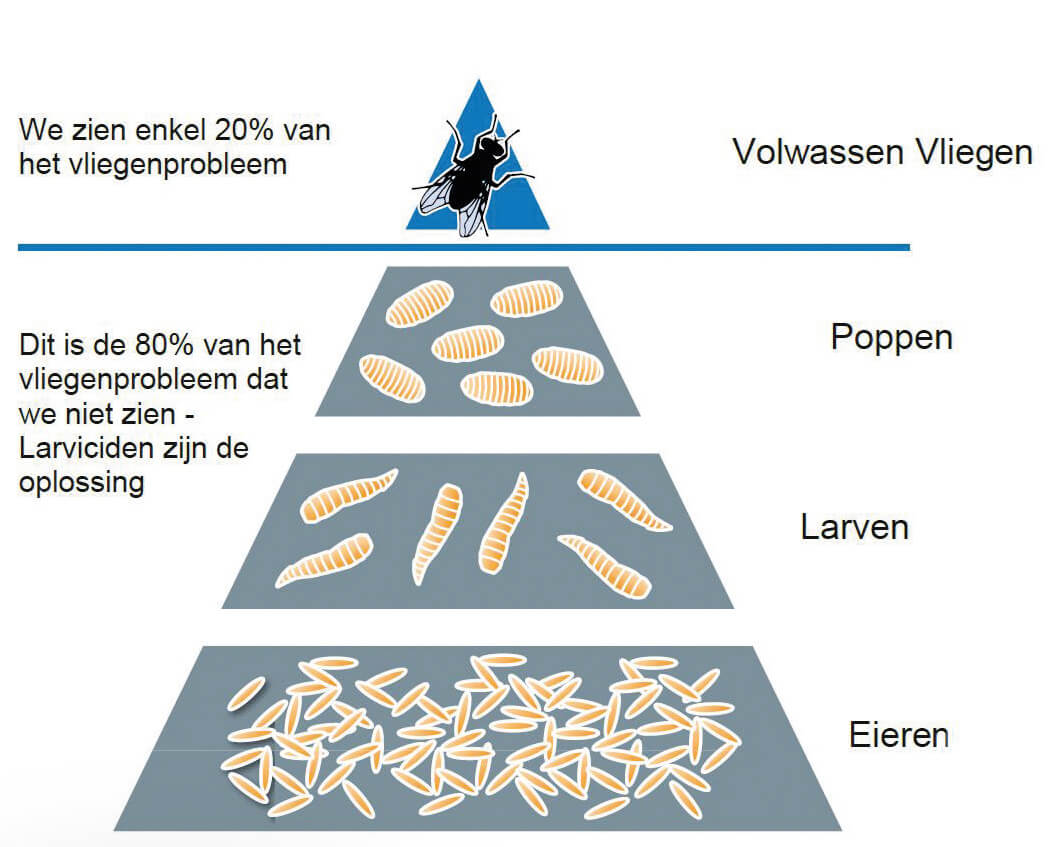
The different stages of the fly with the matching (biological) solutions. Adult fly: Fly Catcher. Pupa: parasitic wasps. Larvae: predatory flies. Eggs: predatory mites. We only use predatory mites when the problem is (too) severe.
A.S predatory flies compete with the pest
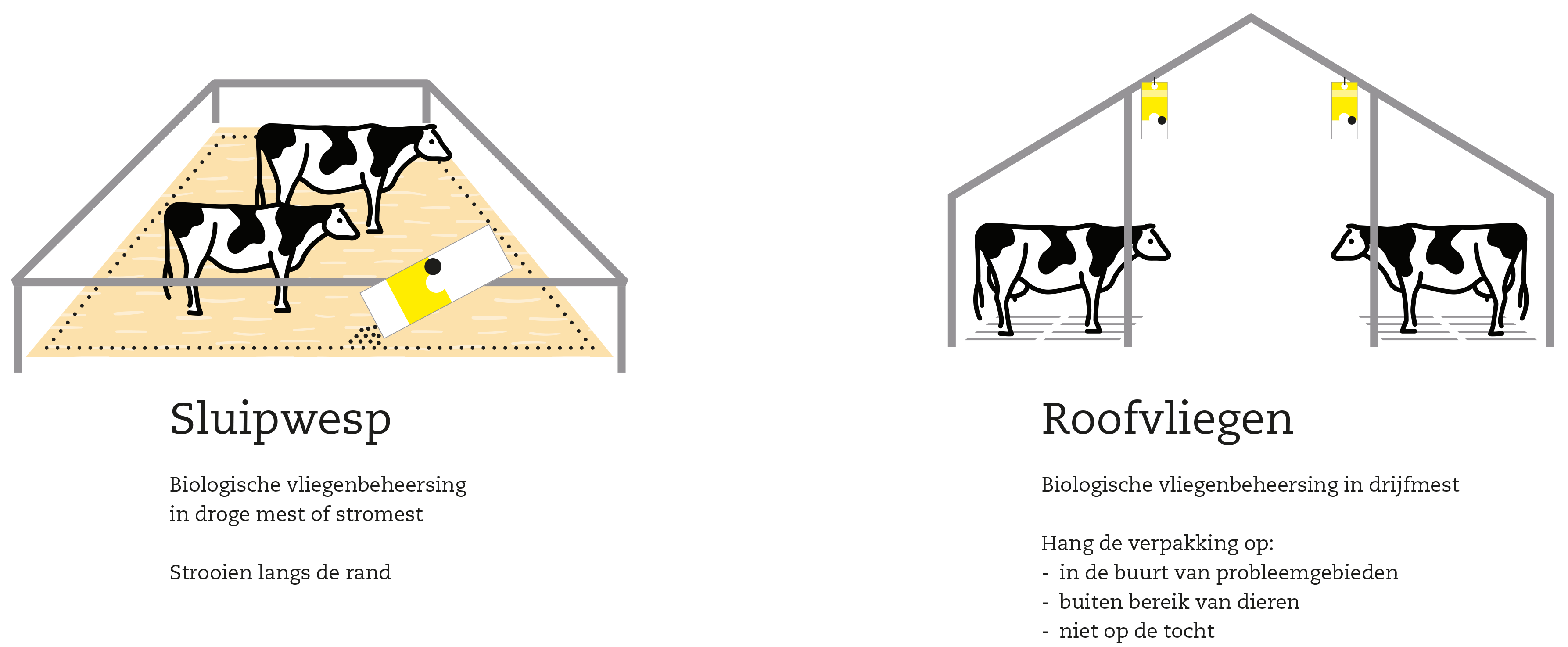
Predatory flies are suitable for preventing fly problems in animals on slatted floors. Predatory flies lay their eggs in the same place as the pest fly, under the slats. The larvae of the predatory fly compete with the larvae of the pest fly and eliminate them. As a result, fewer larvae pupate, which means fewer pest flies. Predatory flies stay mainly under the slats and leave the cattle alone.
The predatory flies are released by hanging the box of pupae above the slats. Make sure the animals cannot reach the box and that it is not hung in a draught.
A.S parasitic wasps bore their way through the pupa
Parasitic wasps are suitable for livestock farms with straw pens. Think of the calving pen, but also group pens for calves, dry cows and goats. The parasitic wasps are very small: about the size of a fruit fly. Adult parasitic wasps lay their eggs in the pupa of the pest fly, and the wasp larvae then feed on the contents of the pest fly pupa.
The parasitic wasps are released along the edges of the straw pen. The pen does not have to be empty and the animals can stay in it. It is important not to muck out the straw pen too often, so the parasitic wasp population is maintained. For this reason, individual calf pens are not suitable for parasitic wasps.
A tailored approach
Whether you choose chemical products, biological control or a combination of both, it is important to make a plan of action for the coming season now. After all, fly control starts as early as April! In short, would you like a tailored approach for your farm? Contact your farm supplier before April to discuss it.
Do you want to stop using chemical pesticides?
For the coming season, we want to follow two dairy farms that use biological fly control. The schedule below will be used as the basis. The farm must have between 75 and 125 dairy cows, including rearing its own youngstock. Are you interested and does your farm meet the conditions above? Sign up via info@farmula.eu, stating: “Biological fly control”. We offer the plan of action at a greatly reduced rate. The results will be presented in autumn 2024.
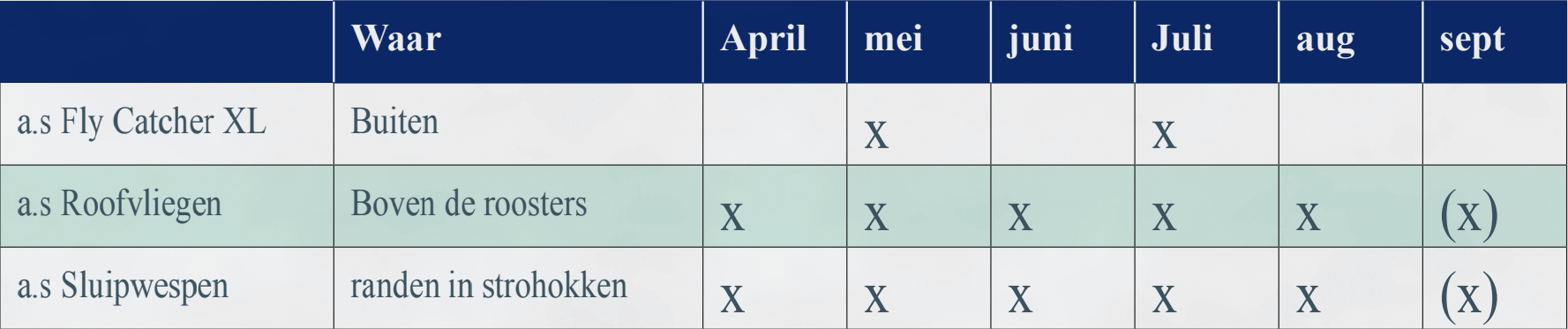
Basic schedule for biological fly control in open barns. Once biological fly control is in place, you receive a package with pupae of predatory flies and/or parasitic wasps every 4-6 weeks. This package comes straight from the breeder. When the package arrives at the farm, it is important to release the pupae in the likely problem areas straight away.


