 EN
 NL
Guide · Heat stress
Heat stress in combination with Claw health
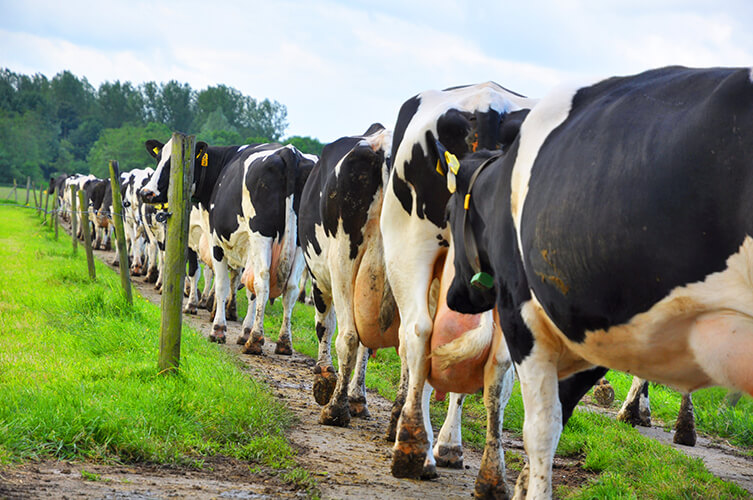
When a cow is outside in the summer, the infection pressure from the barn is lower. Logical, because the cow walks outside,…


In short
Contagious skin condition on the claw (digital dermatitis) that causes lameness.
Mortellaro is a contagious skin condition on the claws of cattle. The technical term is digital dermatitis. The name Mortellaro comes from the Italian vet who described it in 1974. It usually affects the hind legs, on the skin between the heel bulbs or above the interdigital cleft.
Bacteria of the genus Treponema are considered the main cause. They live in slurry and dirt and enter through softened, damaged skin. Mortellaro is widespread in dairy herds and is one of the most common causes of lameness.
A typical lesion is round and sharply defined, red and strawberry-like at first, and bleeds easily. It is very sensitive to touch. Later it can be covered with a scab or wart-like growths. Affected cows take weight off the leg, shift from foot to foot or stand on their toes.
The M-stages are used for classification:
Chronic lesions matter for the spread, because the bacteria survive there and can become active again and again.
The bacteria spread through slurry, wet walking surfaces and hoof trimming tools. Moist, dirty skin is the way in. New cases often come into the herd with bought-in animals. In summer, claw conditions such as Mortellaro are more common in cows kept indoors than in cows at pasture, because the claws dry better outside. Read more in Heat stress in combination with Claw health.
The earlier a lesion is found, the better the outlook. Agree the treatment with your vet or hoof trimmer. The usual approach is to clean the lesion, dry it and treat it locally. After treatment, affected cows should stand as clean and dry as possible.
A good supply of zinc, biotin and vitamins keeps skin and horn resilient, but does not replace hygiene. Once Mortellaro is in a herd, getting rid of it completely rarely works. The aim is to keep the number of acute cases low.
Cows with acute lesions visit the feed fence and the milking robot less often. They eat less, give less milk and are less likely to get in calf. Because the pain is often underestimated, regular checks pay off even in cows that are only slightly lame.
Yes. The bacteria spread through slurry, wet walking surfaces and tools, and often come into the herd with bought-in animals.
A round, red, strawberry-like lesion, usually between the heel bulbs of the hind claws, which is very painful to touch. Chronic lesions are scabby or warty.
A single lesion can heal. Clearing it from the whole herd rarely works. The aim is a low number of acute cases through hygiene, footbaths and early detection.
When a cow is outside in the summer, the infection pressure from the barn is lower. Logical, because the cow walks outside,…
Discover our new magazine “Farming Forward”, formerly known as “Cow Programme”. We have also added topics such as hoof care, hygiene and daily farm supplies.
Read the magazine

Cart

Your cart is empty.