
 EN
EN  NL
NL 

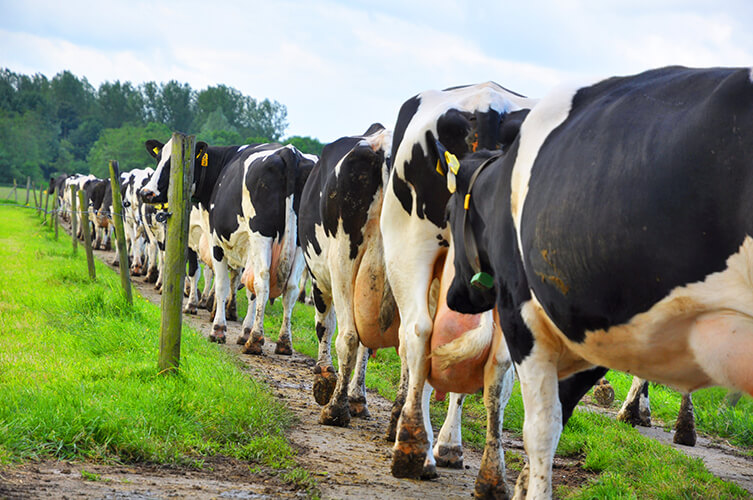
When a cow is outside in the summer, the infection pressure from the barn is lower. Logical, because the cow walks outside, which ensures that the claws dry up (dairy sustainable, 2020). For example, infectious diseases such as Mortellaro, claw infection and stinky leg are often more present in cows that stay in the barn in summer than when the cows also walk outside. Infectious diseases arise when there is reduced resistance; and this is what happens in the heat stress period. By eating less, the cow’s resistance decreases. As a result, she (can) become lame, so she goes to the feeding fence less often. She is also a source of contamination for the other animals in the barn (Dairy Farm, 2021).
Hoof trimmers notice in the winter months that when there has been heat stress in the summer months, the cows get more interclaw inflammation and sole problems arise. Data from Digiclaw (GD) shows a peak in white line problems in quarter 3. (Livestock farmer and vet, 2018) Standing longer and lying shorter puts more pressure on the claws (Brons Voorthuizen, 2021). This can cause sole bleeding because it is better for the cow to stand in one place to get rid of her heat.
As a result of heat stress, we often see that the production of biotin in the rumen is lower (GD). This is often caused by a subclinical rumen acidosis as a result of a lower roughage intake when feeding high concentrate levels. In those cases, the biotin supply of the dairy cows may be insufficient to cover the needs of high-yielding cows (GD). Biotin is responsible for the formation of keratin. Keratin is a protein responsible for the hardness of the claws. So too little biotin has a direct negative effect on horn quality. This softens the claws and increases the risk of white line defects (bleining) or sole ulcers (ulcers).
The effects of heat stress are often only visible after a warm period.
Topro Hoof bolus
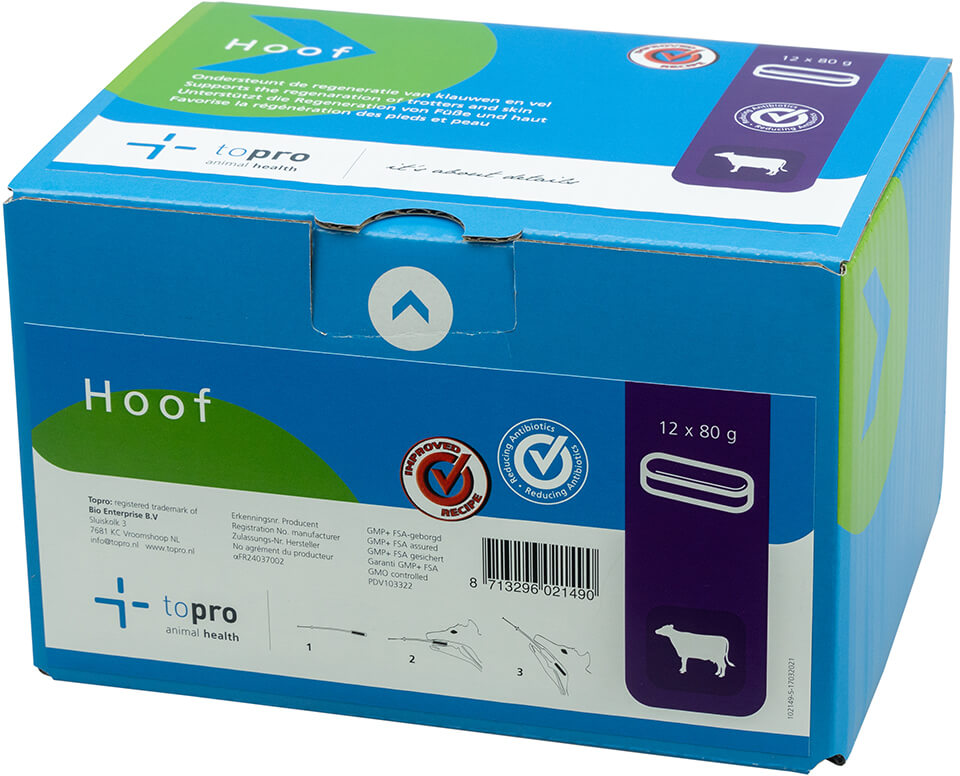
The Topro Hoof bolus is a mineral dietary feed for cattle to support the regeneration of hooves. This bolus contributes to claw formation and the production of keratin by adding zinc, vitamin E and biotin (e.g. daily release of 18 mg biotin over a period of 70 days). Keratin is an important protein complex for hoof care and hoof quality.


