 EN
 NL
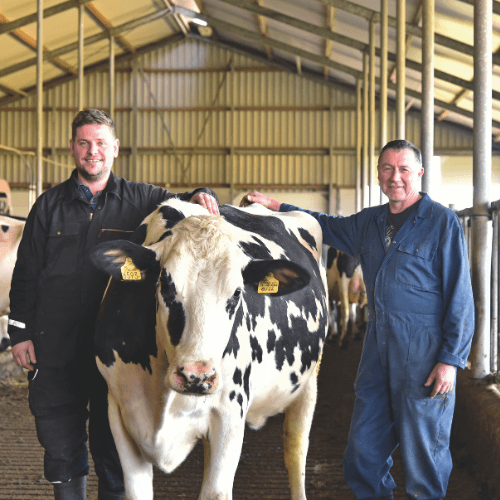
On the farm
Moving barns and switching to milking robots: the role of SecureCattle in a smooth transition
Moving the whole herd and switching to milking robots at the same time: at dairy farm Dwars in Neede, Mart Wagevoort, Debbie…


In short
Automatic milking system (AMS) where the cow goes to be milked on her own and sensors analyse every milking.
A milking robot, also called an automatic milking system or AMS, milks cows without a milker in the parlour. The cow walks into the milking box herself, usually drawn by concentrate. The robot recognises her by her transponder, cleans the teats, attaches the cluster with an arm and removes each quarter separately once it is milked out. Well-known manufacturers are Lely, DeLaval and GEA.
Depending on the system and yield, one box serves about 50 to 70 cows. Cows visit two to three times a day on average, with fresh and high-yielding cows coming more often than cows at the end of lactation.
Every milking produces measurements, usually per quarter:
Many farms combine the robot with collars or ear sensors. These measure activity, feeding time and rumination and help with heat detection.
The biggest advantage of the data is that they show changes before the cow is visibly ill. A cow that does not start well after calving eats less, ruminates less, visits the robot less often and does not build up her milk yield. How to read this is shown in Give boluses before or after calving? This is what robot data shows.
For udder health, conductivity is the most important signal. If it rises more than 30 percent above the cow’s own average, a California Mastitis Test (CMT) is worth doing. A field trial on robot farms followed conductivity when a garlic bolus was given.
The concentrate in the box is both a lure and production feed. You can allocate it per cow by yield and day in milk. Many robots have a second dosing station for liquid feed, which lets fresh cows get targeted energy. If cows take up too little concentrate in the robot, they visit less often, so the ration at the feed fence has to match the robot feed.
The work shifts from milking to monitoring. Instead of standing in the parlour twice a day, you go through attention lists, fetch cows that have not been milked for too long and check anything unusual. Good hoof health matters more than with a parlour, because lame cows are less likely to go to the robot voluntarily. With heifers it pays to get them used to the box before calving.
Milking hygiene is still a must. The robot cleans the teats, but it does not replace regular checks of the teat cups, vacuum and teat ends. Change the liners according to the manufacturer’s instructions.
That depends on herd size, available labour and the building. The robot mainly saves you fixed milking times and gives more flexibility in your day. On the other hand, purchase and maintenance are expensive, and someone on the farm has to be reachable around the clock in case of a breakdown. Many farms report a little more milk from the higher milking frequency, especially in fresh cows.
Good planning of cow traffic matters. Free cow traffic, guided cow traffic with selection gates and feed-first systems each have pros and cons for feeding behaviour and milking frequency.
Depending on the system and milk yield, one box serves about 50 to 70 cows.
Two to three times a day on average. Fresh, high-yielding cows come more often.
It can point to the start of mastitis. A rise of more than 30 percent above the cow's own average is a reason to check that quarter with a California Mastitis Test (CMT).
Moving the whole herd and switching to milking robots at the same time: at dairy farm Dwars in Neede, Mart Wagevoort, Debbie…
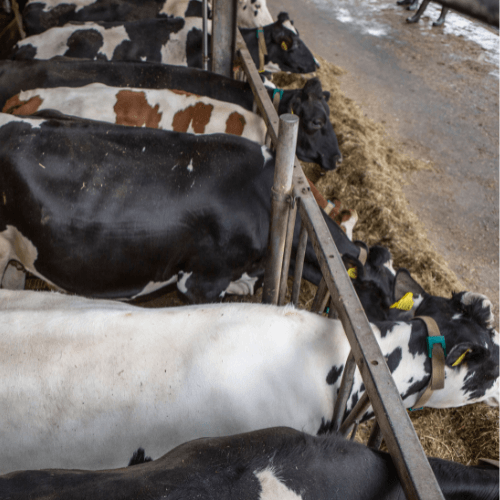
The transition period is the moment when energy supply is under pressure: milk production gets going, hormones fluctuate, and at the…

The cows are currently milked with 2 milking robots, and since the start of this year a third feeding station has been…
Discover our new magazine “Farming Forward”, formerly known as “Cow Programme”. We have also added topics such as hoof care, hygiene and daily farm supplies.
Read the magazine

Cart

Your cart is empty.