 EN
 NL

Necessities · Cattle
Whisk stainless steel 35cm
Stainless steel quality whisk for lump-free mixing. With handy hanging loop.
€9,95 excl. VAT (21%)


At a glance
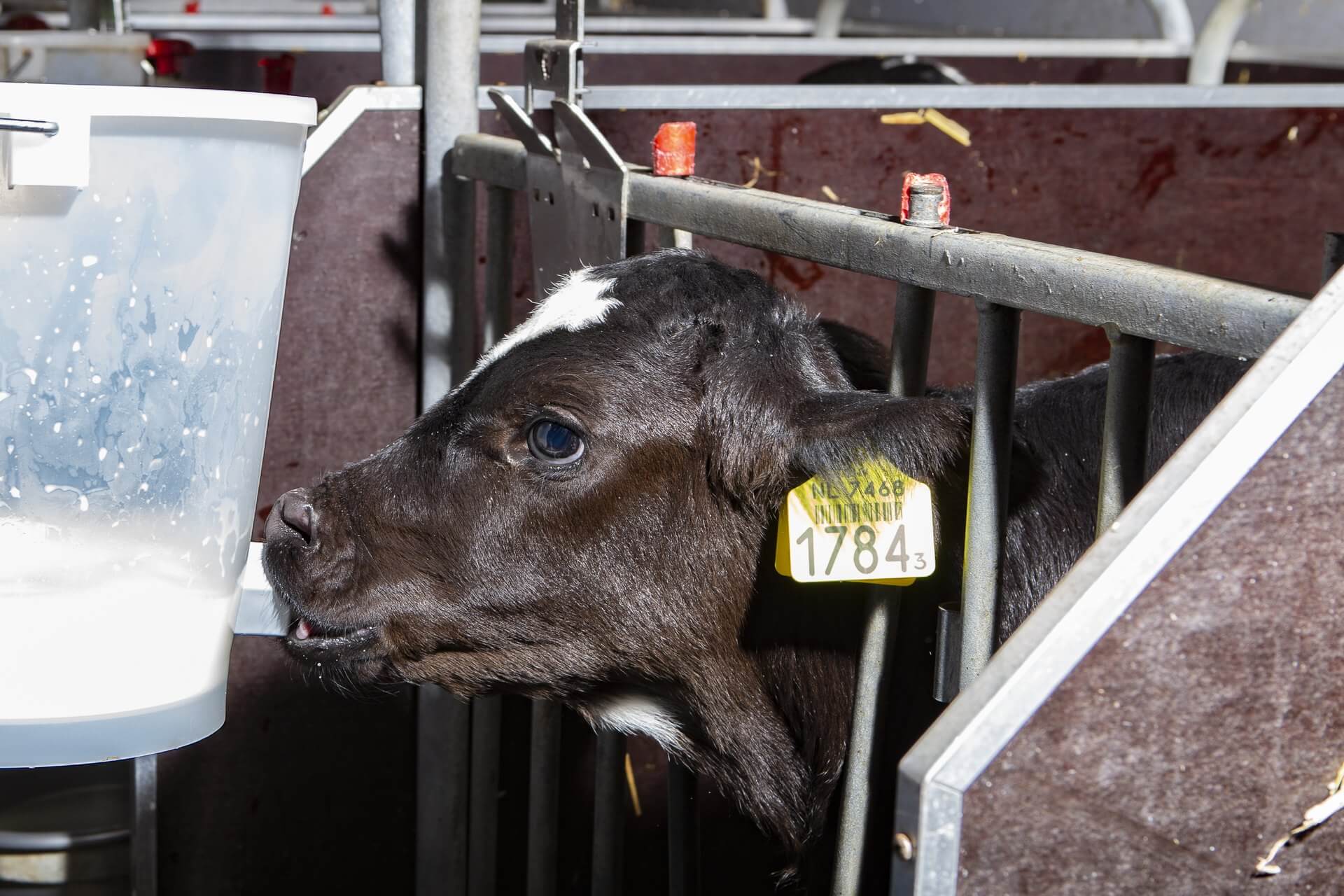
In winter many calves are born indoors, and after colostrum most of them move on to milk replacer. Powder, water, stir: it looks simple. In practice, though, we see that mixing is exactly where a lot of variation creeps in, between feeds, between days and between the people who feed. For a young calf, that matters.
A young calf digests milk in the abomasum, the fourth stomach. In the first weeks the rumen hardly works yet. A calf’s digestion is used to a fixed rhythm: the same time, the same temperature and the same strength of milk. If that changes from feed to feed, the manure can become looser and the calf drinks less eagerly.
So calm and routine are just as important as the powder itself.
Every milk replacer is different. The label tells you how to mix that particular powder. Pay attention to three things in particular:
How many litres a calf gets per day and how you build that up depends on your farm and your rearing plan. Discuss the feeding schedule with your feed advisor.
It helps to hang the method on a card in the milk room. That way everyone who feeds makes the milk the same way.
In a cold barn, milk in an open bucket soon drops a few degrees. The last calf in the row then gets colder milk than the first. So it is better to mix per group rather than for all calves at once, or to use a covered bucket.
In the cold, calves also use more energy to stay warm. Whether you give more milk in cold periods is something to discuss with your feed advisor. You can read more about calves in the cold in our article How to keep calves warm on cold days.
Milk residue is a good breeding ground for bacteria. A fixed cleaning routine after every feed helps:
Check the teats while cleaning. A teat with a small tear or a hole that is too big lets the milk flow too fast. The calf then drinks in big gulps, while calm sucking is better. When the calf sucks, the oesophageal groove closes: this is a fold that guides the milk past the rumen to the abomasum. Hang the teat bucket or bottle at a height where the calf drinks with its head up. You can read more about choosing a teat in Which calf teat suits me?
Milk replacer is feed, not drinking water. Calves already drink water in their first days of life if it is available to them. Make sure there is fresh, clean water in every pen. In winter it is good to check daily that the water has not frozen. In the cold, calves often drink lukewarm water more readily.
If a calf drinks poorly for several feeds or develops a fever, talk to your vet.
You can read more about the first weeks of the calf in the category Calves.
Better not. Bacteria grow quickly in warm milk. Mix fresh milk for every feed, in the amount you need.
There are no lumps floating and no powder lying on the bottom of the bucket. Give it another stir just before feeding, especially if the milk has been standing for a few minutes.
Switching from one day to the next asks a lot of a young calf’s digestion. If you want to change over, do it gradually and talk to your feed advisor.
First look at the milk itself: is it at the right temperature and properly dissolved? Then look at the teat and the height of the bucket. A different feeding time or a different person feeding can also play a role.
As soon as you see a small tear or the milk runs out of the teat too fast. If you take a quick look at the teats every time you clean them, you will spot it in time.
Necessities · Cattle
Stainless steel quality whisk for lump-free mixing. With handy hanging loop.

Necessities · Calves
The handy calf drink bottle Speedy Feeder has been specially designed for feeding young calves. The wide opening makes the bottle easy to fill and clean. The dosage is easy…

Necessities · Calves
Practical teat bucket from HIKO. This quality bucket is made of high-quality plastic and intended for feeding calves. The dimensions (8 L) can be read well on the outside and…
A newborn calf has an open navel. Here is how to care for it in a few minutes: a clean calving area,…
If a newborn calf does not drink well, a feeding tube helps it get colostrum in time. Here is how to do…

Choosing the right teats for your calves can be complicated. After all, there are so many teats and systems on the market!…
Discover our new magazine “Farming Forward”, formerly known as “Cow Programme”. We have also added topics such as hoof care, hygiene and daily farm supplies.
Read the magazine

Cart

Your cart is empty.