 EN
 NL

Guide · Calves
How to keep calves warm on cold days
Winter is making itself felt, cold days and nights with high humidity lower the perceived temperature. Calves notice this too. Calves generally…


In short
Feed high in crude fibre, such as hay, straw and silage, that stimulates the rumen and rumination.
Roughage is plant feed with a lot of crude fibre and long structure. It includes hay, straw, grass silage and, to a lesser extent, maize silage. The cow has to chew and ruminate the fibres. That is exactly why ruminants cannot do without roughage: it keeps the rumen moving and produces plenty of saliva, which buffers the acids in the rumen.
These terms are often mixed up.
The rumen microbes ferment carbohydrates into acids. Without enough structure the cow chews less, produces less saliva and the rumen pH drops. The fibre-digesting bacteria decline, milk fat falls and rumen acidosis becomes a risk. Long fibres also form a fibre mat in the rumen, which holds back small feed particles and so improves digestion.
As a guide, the total ration should contain at least 16 to 18 percent crude fibre in the dry matter. Figures alone do not tell the whole story, though. Finely chopped silage does contain crude fibre, but little physically effective fibre. In practice it helps to look at the cows: at least half of the lying animals should be ruminating, and a cow ruminates for around eight hours a day.
Straw has little energy and a lot of structure. It is mainly used in dry cow rations so the cow feels full without getting too fat. For this to work, the straw must not be too long. At a chop length of 2 to 4 cm the cows can hardly sort it out. Put the straw into the mixer wagon before the silage and make sure it is good quality and free of mould. You can read more tips in Better calves through optimal nutrition in the dry period.
Forage quality varies with cutting date, weather, fertilising and ensiling. Grass cut early has more energy and protein, but less structure. Grass cut late has more crude fibre and is less digestible. So have your grass silage and maize silage analysed regularly, at least for every new clamp. For dry cows it is also worth testing for calcium, phosphorus, potassium and DCAB, because grass silage often contains a lot of potassium.
The better the forage, the less concentrate the cow needs for the same yield. That lowers feed costs and is easier on the rumen.
Calves need free access to hay or straw from their first week of life. It trains the rumen muscles, while concentrate makes the rumen papillae grow. In the first weeks, though, most of the energy comes from milk. Putting the focus on roughage too early slows growth, because the rumen cannot yet make good use of the fibres.
Forage is all basic feed grown on the farm. Roughage is the part of it with a lot of crude fibre and structure, so hay, straw and silages.
As a guide, at least 16 to 18 percent crude fibre in the dry matter of the total ration, with enough long structure.
About 2 to 4 cm. Cows sort out longer straw, and then the ration they actually eat lacks structure.
Winter is making itself felt, cold days and nights with high humidity lower the perceived temperature. Calves notice this too. Calves generally…
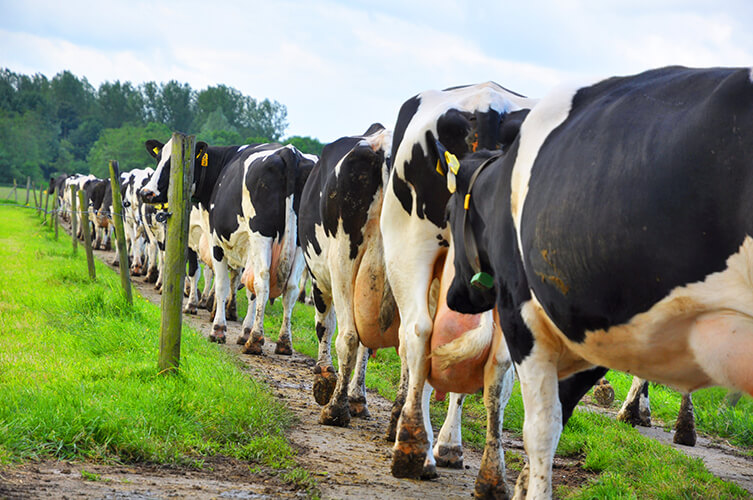
When a cow is outside in the summer, the infection pressure from the barn is lower. Logical, because the cow walks outside,…

In this period with relatively cold and damp weather, dairy farmers need to keep a close eye on the health of their…
Discover our new magazine “Farming Forward”, formerly known as “Cow Programme”. We have also added topics such as hoof care, hygiene and daily farm supplies.
Read the magazine

Cart

Your cart is empty.