 EN
 NL
Field trial · Energy
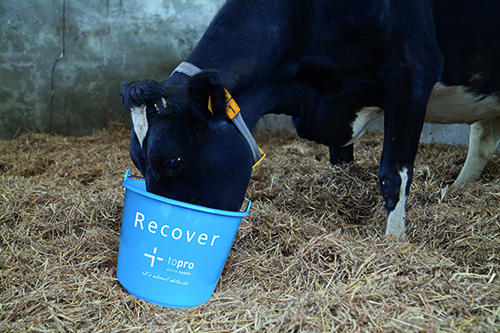
Field study: Better start after calving with Topro Recover cow drink
The time around calving is a critical period for the cow. Because milk production is starting up, the cow becomes short of…


In short
The abomasum moves out of place, usually to the left between the rumen and the abdominal wall, mainly in the weeks after calving.
The abomasum is the fourth stomach of cattle and corresponds to the human stomach. It normally lies at the bottom right of the abdomen. In a displaced abomasum, it fills with gas, rises and moves to another position.
Most cases occur in the first weeks after calving. Several things come together at that time. After the birth there is suddenly a lot of space in the abdomen. At the same time, feed intake is low and the rumen is poorly filled, so it can no longer hold the abomasum in place. When the abomasum moves little, gas builds up and it rises.
This is made more likely by:
How these conditions are linked is explained in Clinical and subclinical symptoms.
The vet makes the definite diagnosis. When listening to the abdominal wall while tapping it, a typical high-pitched ping can be heard over the gas-filled abomasum, like tapping on a tin can.
A displaced abomasum belongs in the hands of the vet. Depending on the case, the abomasum is put back and fixed in place surgically, or the cow is rolled. Accompanying conditions such as ketosis or calcium deficiency are treated at the same time. The earlier it is spotted, the better the outlook.
Prevention mainly means keeping feed intake high around calving. That includes good dry cow feeding without cows getting overconditioned, a separate close-up group, measures to lower the risk of milk fever and a ration with enough structure. It helps to build up concentrate slowly after calving. Talk to your nutritionist about how to put this into practice.
Freshly calved cows should start eating quickly and well. Good rumen fill straight after calving, for example by giving her water to drink or by drenching, supports this. Read more in The advantages of drenching. Keep an eye on feed intake, rumination and milk yield of every fresh cow in the first two to three weeks. With robot or sensor data, a cow that is eating less stands out early.
A displaced abomasum costs milk, vet bills and labour. Affected cows more often have further problems in the same lactation and are more often culled early. If several cases occur in a herd, the cause almost always lies in the feeding of dry cows and fresh cows.
Most cases occur in the first weeks after calving, when feed intake is low and the rumen is poorly filled.
Left displacement is the most common form. Right displacement is less common but more dangerous, because the abomasum can twist.
Keep feed intake high around calving, avoid overconditioned dry cows and lower the risk of milk fever and ketosis. Treatment is a job for the vet.
The time around calving is a critical period for the cow. Because milk production is starting up, the cow becomes short of…

What is the difference? In case of illness or disease we often talk about certain symptoms or behaviour we observe in animals.…
Increasing the lifespan of your dairy cows is paying off. From three to five lactations yields between 25,000 to 37,000 euros for…
Discover our new magazine “Farming Forward”, formerly known as “Cow Programme”. We have also added topics such as hoof care, hygiene and daily farm supplies.
Read the magazine

Cart

Your cart is empty.