 EN
 NL

Field trial · Energy
Lower risk of ketosis and earlier pregnancy
Energy shortage, "slepende melkziekte" and ketosis: different terms for the same problem. Calving demands a lot from a cow, both metabolically and…


In short
The main ketone body in a cow's blood. From 1.2 mmol/l it counts as subclinical ketosis.
BHB stands for beta-hydroxybutyrate, also called beta-hydroxybutyric acid. Together with acetoacetate and acetone it is one of the three ketone bodies, and the main one in a cow’s blood. Ketone bodies are formed in the liver when body fat is broken down and cannot be fully used.
After calving, milk yield rises faster than feed intake. The cow fills the gap from her fat reserves. In small amounts ketone bodies are normal and even serve as a source of energy. If they rise too far, the cow has ketosis. The BHB value is therefore the standard measure for detecting ketosis, including the subclinical form without visible signs.
Some sources set the threshold for subclinical ketosis at 1.4 mmol/l. More important than the exact threshold is that you always measure the same way and compare the values over time.
There are three ways:
The highest risk is in the first two to three weeks after calving. Measuring fresh cows between day 3 and day 14 of lactation makes sense. It pays to target cows at risk: overconditioned cows, older cows, cows with milk fever, twins or a retained placenta, and cows that are eating less.
For a view of the whole herd, you can test a sample group of fresh cows. If a large share of them is above the threshold, the problem usually lies in the feeding of dry and fresh cows, not in individual animals.
Even without a meter there are signs. A fat to protein ratio above 1.4 in milk recording in the first weeks of lactation points to heavy fat mobilisation. So does a loss of more than one BCS point after calving. Sometimes the breath or the milk smells sour, of acetone.
A high value shows that the cow is getting too little energy. The aim is to supply energy quickly and encourage feed intake. Glucogenic substances such as propylene glycol are used for this. With high values or a sick cow, talk to your vet.
In the long run the solution lies in the dry period: not letting cows get too fat, good close-up feeding and high feed intake after calving. Read more in Milk fever or ketosis? What every dairy farmer needs to know. How earlier field trials assessed the BHB content of milk is described in Give boluses before or after calving? This is what robot data shows.
From 1.2 mmol/l in the blood it counts as subclinical ketosis, from about 3.0 mmol/l as clinical ketosis. Some sources set the first threshold at 1.4 mmol/l.
Between day 3 and day 14 after calving, especially in cows at risk such as overconditioned or older cows.
Yes, with test strips or through milk recording. Some milking robots measure ketone bodies automatically. A blood test with a handheld meter is the most accurate method in the barn.
Energy shortage, "slepende melkziekte" and ketosis: different terms for the same problem. Calving demands a lot from a cow, both metabolically and…

It is a common ailment in dairy cattle: ketosis, also referred to as acetonemia. Research has shown that in the first two…
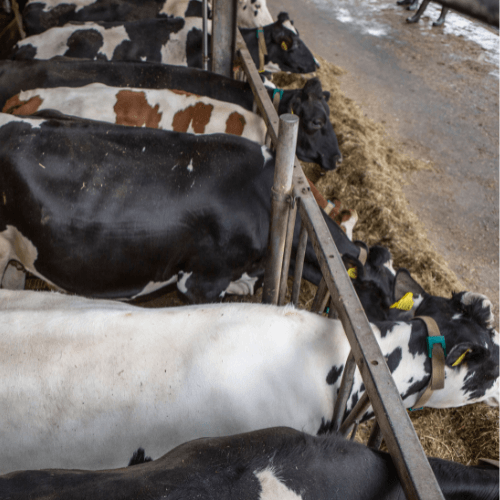
The transition period is the moment when energy supply is under pressure: milk production gets going, hormones fluctuate, and at the…
Discover our new magazine “Farming Forward”, formerly known as “Cow Programme”. We have also added topics such as hoof care, hygiene and daily farm supplies.
Read the magazine

Cart

Your cart is empty.