
 EN
EN  NL
NL 

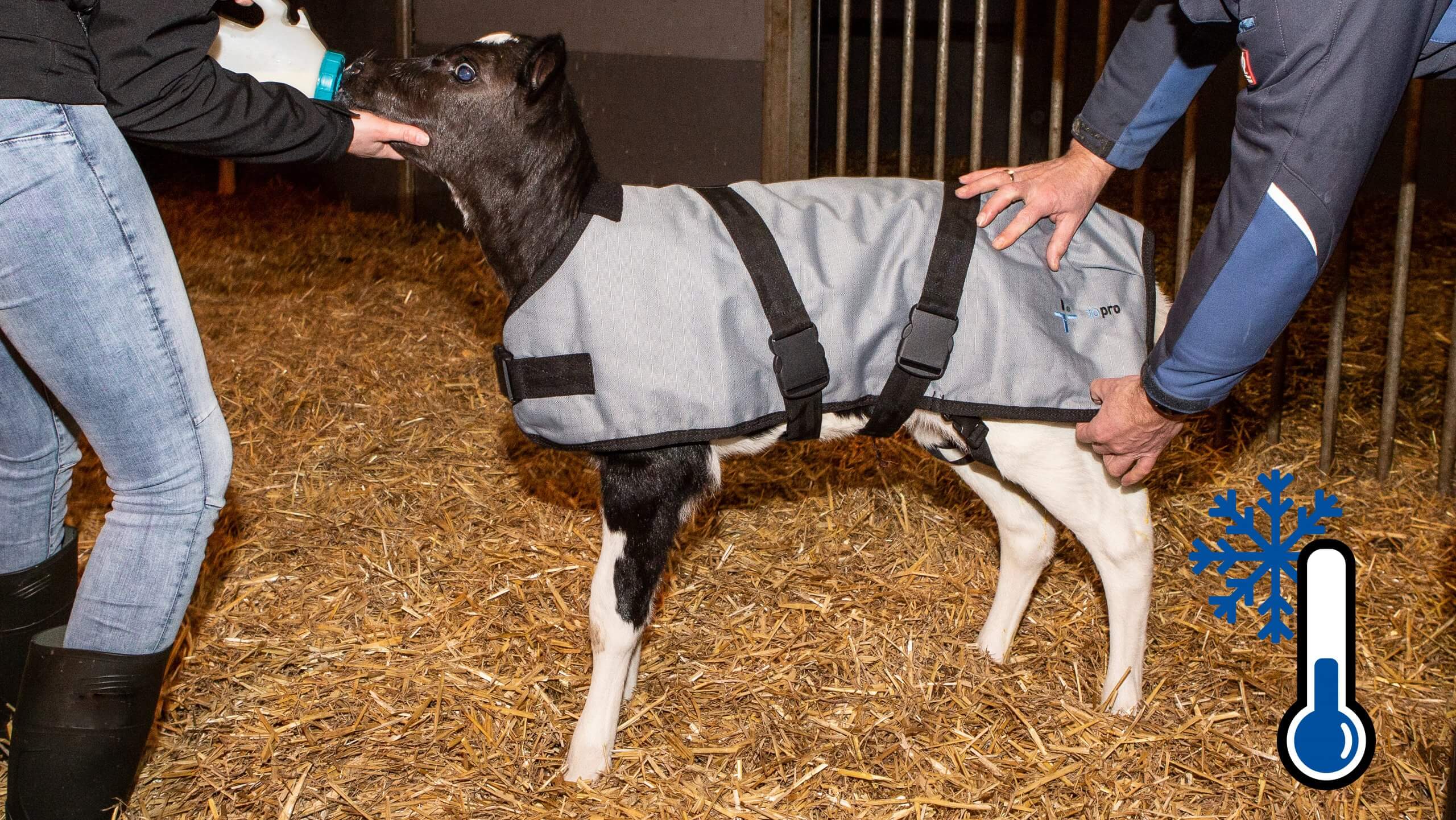
Winter is making itself felt, cold days and nights with high humidity lower the perceived temperature. Calves notice this too. Calves generally cope well with a bit of cold, but you still need to watch out for hypothermia. Calves that are cold have their hair standing up and may shiver. This can weaken their resistance, and the calf has a higher risk of diarrhoea or pneumonia. With these tips, your calves will get through the cold days warm.
The temperature at which you need to pay extra attention to hypothermia in calves depends on the age of the calves and on the humidity and wind speed in the calf barn. Calves younger than 3 weeks in particular are the most vulnerable to temperature swings and can quickly suffer from the cold, even at a temperature of 10°C (at night). Calves older than 3 weeks regulate their body heat better and need extra support below 6°C, provided there is no draught.

Strong dry cows give warm calves
When a calf is born, it moves from a warm uterus of around 38.5 °C to a fresh barn environment. A healthy calf is good at regulating its body heat, especially if the cow licks the calf quickly and helps dry it off. A wet calf can cool down fast, especially in a draught.
Calves that have already had a hard start also cool down faster. Examples are calves that were too heavy at birth, twins, or calves from weak cows. Cows short of energy, protein and trace elements can give birth to weaker calves and produce colostrum with less energy and fewer antibodies. Calves from well-fed cows use up their reserves more slowly and cope more easily with critical periods.
It is also important on cold days to give the calf colostrum straight away. The absorption of antibodies and energy drops as the calf’s body temperature falls. That energy then cannot be used to keep the calf warm, and the antibodies cannot protect the calf well enough against infections and disease. Does the calf still not feel warm enough afterwards? Then feed the leftover colostrum to the calf at the 2nd or 3rd milking.
The right barn climate
First of all, make sure there is no draught in the calf barn. It sounds obvious, but it is the main reason calves get cold in the calf pen. At the same time, keep an eye on getting enough fresh air into the barn. So be critical of the barn climate, especially on these cold days.
Calves also need to lie dry, with enough straw in the pen. Straw is perfect for winter, as it holds heat better than, for example, sawdust or sand. There does need to be enough straw in the pen: as a rule of thumb, the hind legs should no longer be visible when the calf lies in the straw.
Calf jackets improve feed efficiency
Calf jackets can add value, especially for calves younger than 3 weeks. Calf jackets have been shown to contribute to better feed efficiency. Calves that are cold need more milk to get more energy to keep themselves warm. These calves use more (replacer) milk but do not grow or develop any better!
On cold days you can raise the milk powder concentration slightly (by about 10%) to give calves extra energy. You can also add a 3rd milk feed, for example giving milk at midday instead of water. Feeding generously pays off, provided the milk has the right composition. It is also important that calves, especially older calves, always have unlimited access to roughage and water. In the morning, check that the water bowls are not frozen.
Calf jackets can reduce energy loss. That makes it worthwhile to put a calf jacket on calves from day 1. The calf must be dry first, otherwise it can get cold after all. You can keep a wet calf warm with a heat lamp.
When using calf jackets, check carefully that the jacket fits well, so the calf is covered from neck to tail. Adjustable straps are also handy for refitting the jacket as the calf grows.
All tips at a glance:
- Make sure you have well-fed, strong dry cows for strong calves and good colostrum production. A correct dry period ration is the basis for a good start to lactation and for calf rearing. Check the dry period minerals and support the resistance of cow and calf by giving a Dry bolus.
- Give the calf as much good-quality colostrum as possible right after calving. Test the colostrum so you know its quality. Is the colostrum below 22%? Enrich it with Colostrum Mix to improve its quality. If needed, feed the first colostrum to the calf again at the 2nd or 3rd milking. Good colostrum management gives the calf enough energy to keep warm and enough antibodies to be protected against pathogens.
- Keep newborn, wet calves warm with a heat lamp. Once the calf is dry and warm, a calf jacket is recommended at 15 °C and colder until the calf is at least 3 weeks old. Older calves can wear a jacket from 10 °C. Keep in mind that these temperatures are easily reached at night!
- Only use clean and dry calf jackets to prevent cold and possible infections. It is also important that the calf jackets fit well, so the calf is covered from neck to tail. Adjust the straps every other week to keep the jackets fitting the growing calf.
- Make sure there is no draught in the calf barn. Check for draught yourself at calf height, and/or bring in a specialist to find the cause of the draught. Calves do need enough fresh air, so find the right balance between draught and fresh air in the calf barn.
- Make sure calves do not lie wet. Use enough straw in the pen so the calf can nest well. As a rule of thumb, the hind legs should no longer be visible when the calf lies in the straw.
- Check that the calves, both young and older, have access to enough fresh roughage and water. Thaw the water bowls early in the morning after a night frost.
- Consider giving the calves a higher concentration (about 10%) of milk replacer or adding a 3rd milk feed in the afternoon. This gives calves an energy boost and helps them stay warm more easily.


