 EN
 NL
Guide · Energy
Rumination as a starter motor
Rumination looks like calm behaviour, but it is actually a quick check of rumen health. During rumination, feed particles are broken down…


Calving is a critical and demanding period in the life of a dairy cow. Many factors decide how smoothly a cow gets through this transition, such as calcium balance, energy balance and resistance. Good dry period management can make the difference here and lower the risk of problems such as milk fever and ketosis.
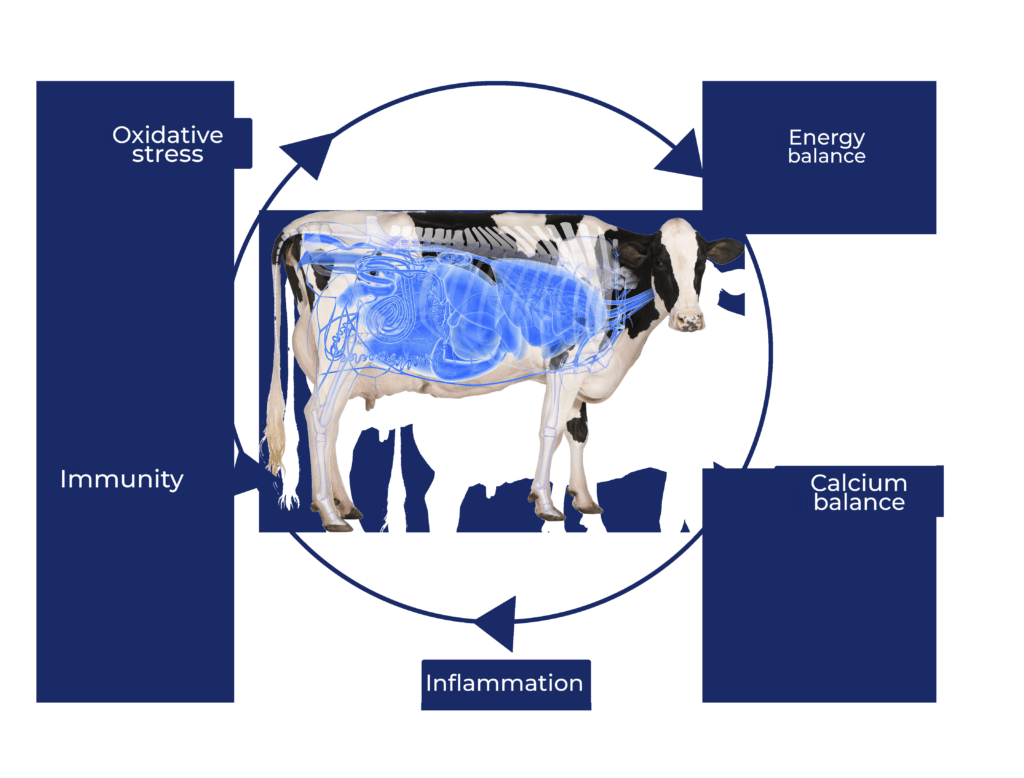
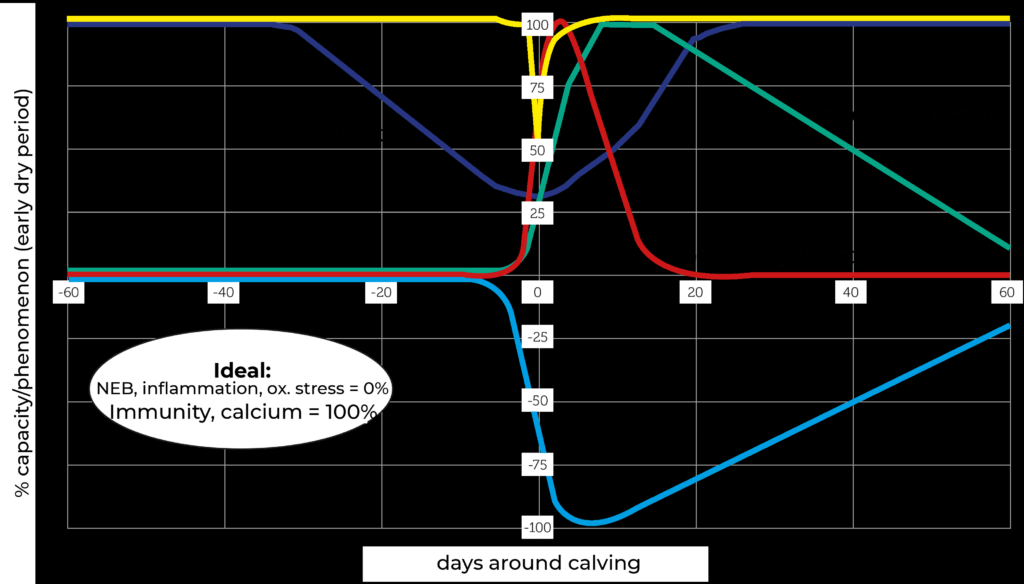
After calving, cows’ calcium demand shoots up because milk production begins. If the body cannot meet this demand quickly, calcium shortages develop, showing as muscle weakness, reduced feed intake and a higher risk of secondary problems such as uterine infection. Cows with a stable calcium balance recover faster and get milk production going more quickly. Giving calcium around calving helps keep the calcium level up.
A negative energy balance (NEB) develops when a cow needs more energy for milk production than she takes in through feed. This forces the body to draw on fat reserves, which can lead to ketosis and liver problems. A balanced dry period ration, combined with energy-rich supplements such as propylene glycol after calving, can stimulate feed intake and restore the energy balance. This brings the cow back into balance sooner.
During calving a cow’s metabolism rises sharply, which increases the production of free radicals. If these are not neutralised enough by antioxidants such as vitamin E and selenium, oxidative stress develops. This can damage cells and tissues, weaken resistance and make inflammation worse. A ration rich in antioxidants helps limit this damage and supports faster recovery.
The basis for a successful start of lactation lies in the dry period. In a good ration, grass silage, maize, straw and a mineral mix are carefully balanced. This makes sure the cows take in all essential nutrients, which raises their resistance and lowers the risk of problems around calving.
The difference between a cow that starts smoothly after calving and a cow that struggles is largely decided by a balance in calcium metabolism, immune function, antioxidants and energy management. Genetics play a part, but a large share of the success lies in good management. A balanced ration during the dry period, less stress and preventive measures against conditions such as milk fever and ketosis are essential. This raises milk production, and also the welfare and lifespan of the dairy cows.
Rumination looks like calm behaviour, but it is actually a quick check of rumen health. During rumination, feed particles are broken down…
The transition period is the moment when energy supply is under pressure: milk production gets going, hormones fluctuate, and at the…

The cows are currently milked with 2 milking robots, and since the start of this year a third feeding station has been…
Discover our new magazine “Farming Forward”, formerly known as “Cow Programme”. We have also added topics such as hoof care, hygiene and daily farm supplies.
Read the magazine

Cart

Your cart is empty.