
 EN
EN  NL
NL 

Dairy cows face a considerable energy challenge during the transition period: the energy requirement for milk production rises quickly, while feed intake is often not yet up to level. This leads to a negative energy balance, which is a risk factor for ketosis. This condition is marked by a reduced ability of the cow to use the available energy efficiently, with possibly serious consequences for health and milk production.
Mode of action
A glucogenic energy source is often used as a supplement for dairy cows. It can be drenched directly into the mouth, mixed into the TMR or given through a dosing system in the concentrate feeder. It provides concentrated energy that is quickly available to the cows. It is efficiently metabolised in the liver, where it is converted into glucose and other energy sources. This process helps compensate for the negative energy balance and supports an optimal energy status in dairy cows.
Benefits of glucogenic energy in dairy cattle:
Improved glucose production: Both propylene glycol and glycerol act as a precursor for gluconeogenesis, the process in which glucose is synthesised from non-carbohydrate sources. This contributes to increased glucose production, which is essential for a balanced energy supply.
Liver support: Ketosis often goes together with fatty liver. Glycerol and propylene glycol support liver function by promoting the conversion of fatty acids, which lowers the risk of fatty liver.
Lower risk of ketosis: Because of the benefits above, using glucogenic energy at the start of lactation helps reduce the risk of ketosis, which improves the overall health and productivity of the dairy cows.
The most common glucogenic energy sources are glycerol and propylene glycol, but what is the difference?
The main difference between these two forms of glucogenic energy lies in their energy density and palatability. Propylene glycol has the highest energy density at 27.8 MJ/kg (glycerol 18 MJ/kg), but propylene glycol is very unpalatable for cows. Glycerol, on the other hand, is very palatable for a cow and gives a steady release of energy. Graph 1 shows the release time schematically.
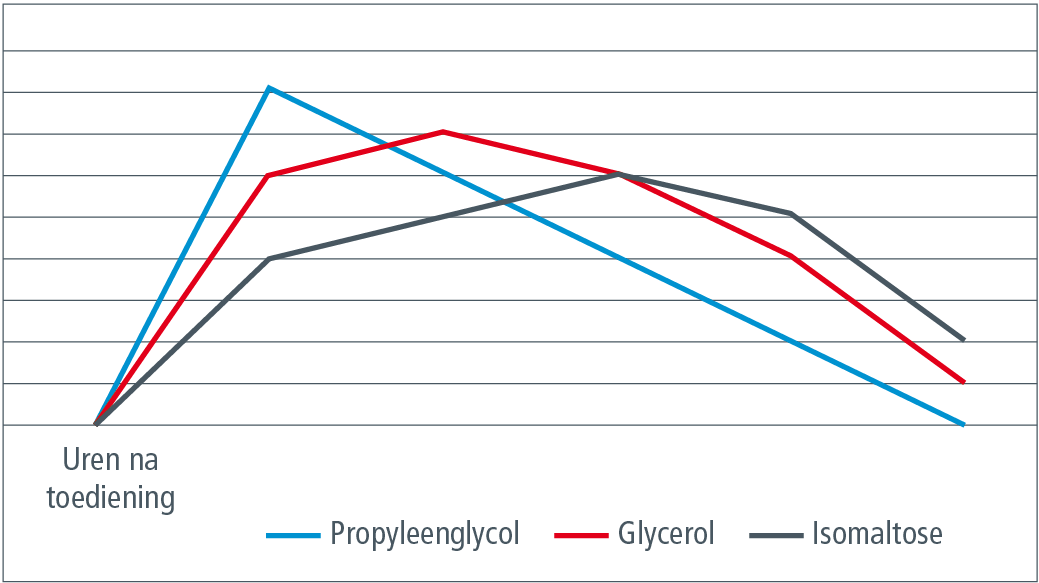
Graph 1. Availability of energy components in the hours after administration. Propylene glycol is released immediately, while glycerol is released steadily. Isomaltulose molasses has a slightly lower, steady release of energy.
Topro KetoCare contains both propylene glycol and glycerol to reduce the risk of ketosis. To keep it palatable, isomaltulose molasses has been added, which gives a liquorice-like taste and an extra energy source. This gives Topro KetoCare a high glucogenic value. Topro GlyCare contains only glycerol as an energy source, which gives a steady release of energy.


