 EN
 NL
Guide · Calves
Tube feeding a calf: when to use the tube and how to do it safely
If a newborn calf does not drink well, a feeding tube helps it get colostrum in time. Here is how to do…


In short
The fourth stomach of cattle. Here feed is digested with stomach acid and enzymes, much like in the human stomach.
The abomasum is the fourth and last stomach of cattle. In front of it lie the three forestomachs: rumen, reticulum and omasum. In the forestomachs, microbes break down the feed. The actual digestion with stomach acid and enzymes only takes place in the abomasum. It is the true stomach of the cow and works much like the human stomach.
It is also called the rennet stomach. Rennet is an enzyme that makes milk curdle, and young calves produce it mainly in the abomasum. In the adult cow, the abomasum lies low in the abdomen, slightly to the right of the middle.
From the omasum, the feed mash passes into the abomasum. The stomach wall produces acid and enzymes that mainly break down protein. The microbes from the rumen are digested here as well. They are an important source of protein for the cow. After that, the mash moves on into the small intestine.
To work well, the abomasum needs a regular fill and good muscle tone. Both are closely linked to feed intake and the rumen. When a cow eats little, the rumen and abomasum stay emptier, and the abomasum can shift more easily.
In the newborn calf, the abomasum is the largest and most important stomach. The forestomachs are still small and only develop when the calf takes in hay, concentrates and water. When the calf drinks, the oesophageal groove closes. This is a kind of channel that guides the milk past the forestomachs straight to the abomasum. There the milk curdles and is digested slowly.
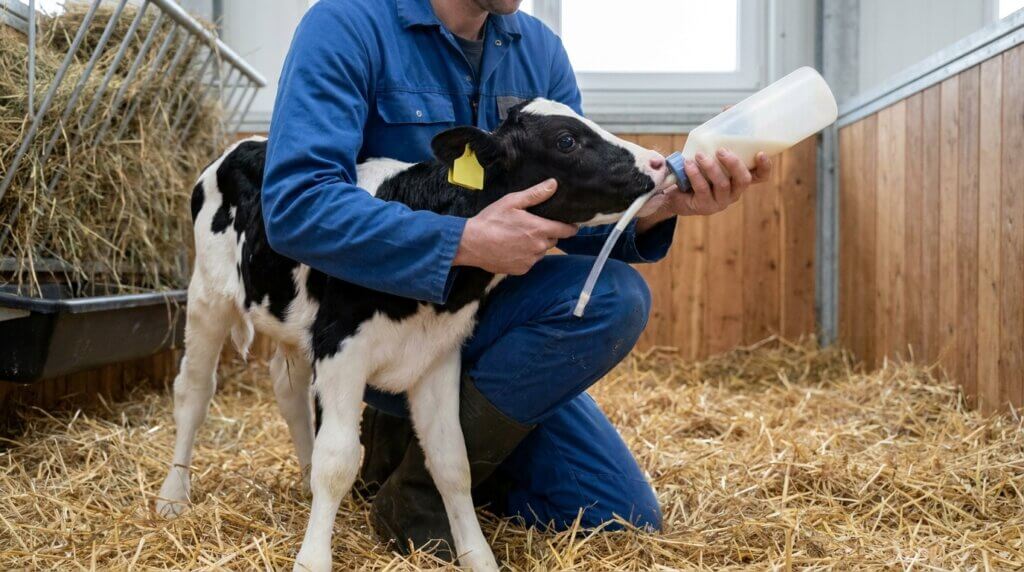
When a calf is tube fed, the colostrum or milk goes into the forestomachs first. That is why the bottle is preferred when the calf drinks well. Fixed feeding times and lukewarm milk are kind to the calf’s abomasum.
When the abomasum is slack and filled with gas, it can move upwards out of its normal position. Usually it shifts to the left, between the rumen and the left abdominal wall. This is called a left displaced abomasum. Less often it shifts to the right. The right-sided form can come with a twist of the abomasum and is then an emergency.
Most cases occur in the first weeks after calving. In this period the cow still eats less than she would need for her rising milk yield, and after the birth there is a lot of free space in the abdomen.
A displacement is confirmed by listening with a stethoscope while tapping the abdominal wall. Over the displaced abomasum you hear a high, metallic ping. If you suspect it, talk to your vet.
A displaced abomasum rarely has just one cause. In practice we often see it in cows that get off to a slow start after calving. Known risk factors are:
For the abomasum, what matters most is that the cow eats well after calving and the rumen is well filled. How the ration for dry cows and fresh cows should look is best discussed with your nutritionist.
A cow has three forestomachs, namely the rumen, reticulum and omasum, plus the abomasum. Only the abomasum digests feed with stomach acid and enzymes, much like the human stomach.
The abomasum lies low in the abdomen, slightly to the right of the middle. With a displaced abomasum it usually moves up to the left, between the rumen and the abdominal wall.
In the newborn calf the forestomachs are still small and the abomasum is the largest stomach. When the calf sucks, the oesophageal groove closes and guides the milk straight to the abomasum, where it curdles and is digested.
If a newborn calf does not drink well, a feeding tube helps it get colostrum in time. Here is how to do…
Discover our new magazine “Farming Forward”, formerly known as “Cow Programme”. We have also added topics such as hoof care, hygiene and daily farm supplies.
Read the magazine

Cart

Your cart is empty.