 EN
 NL
Guide · Calves
Tube feeding a calf: when to use the tube and how to do it safely
If a newborn calf does not drink well, a feeding tube helps it get colostrum in time. Here is how to do…


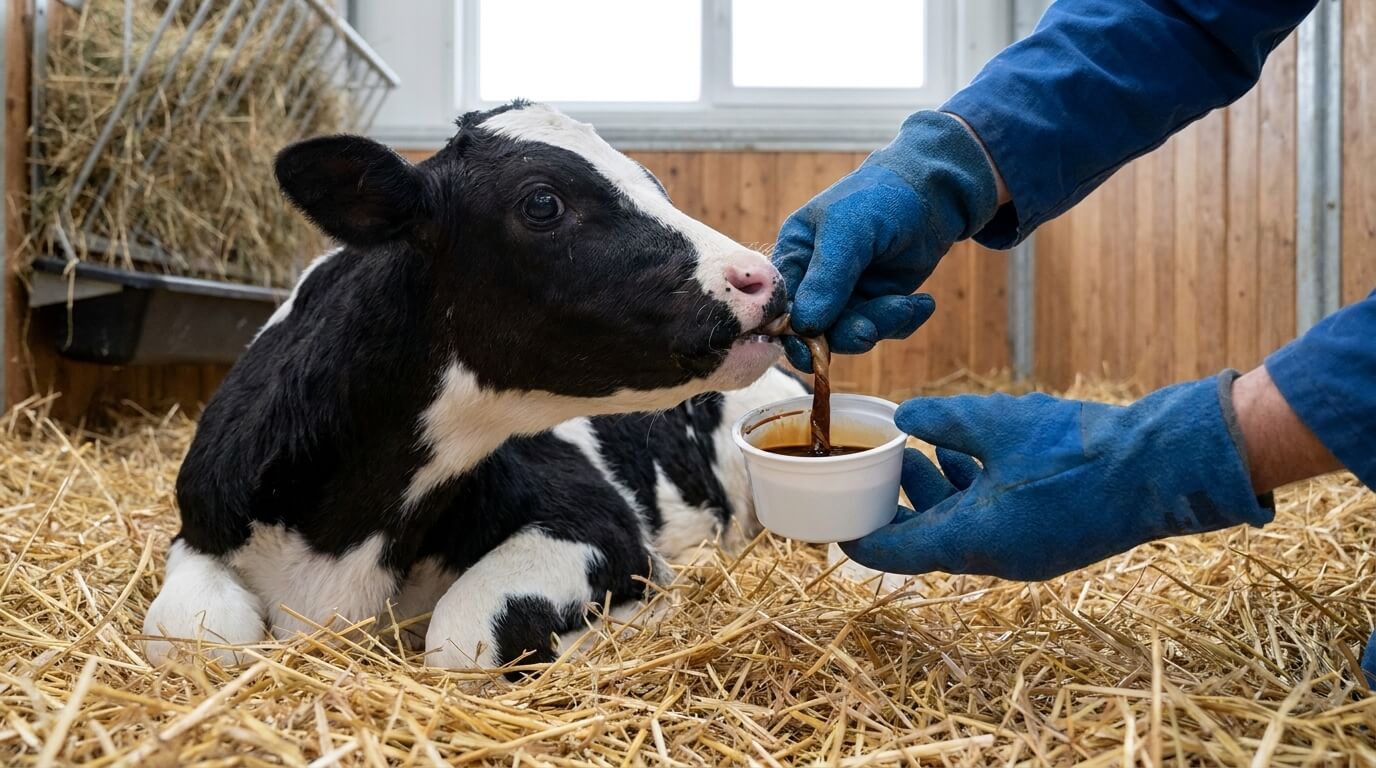
A newborn calf has an open navel. In the first days, that is an open route into the body for bacteria from the calving pen. Good navel care takes a few minutes per calf. Like colostrum, it is part of a good start. In winter, when calves are born indoors and the straw gets wet and dirty faster, the navel deserves extra attention.
In the womb, the calf receives blood and nutrients from the cow through the umbilical cord. At birth the cord tears. The blood vessels and the urinary duct inside the belly stay open for some time afterwards. Until the cord has dried up, bacteria can get in through the navel.
An inflamed navel is called navel ill (omphalitis). A calf with navel ill often feels unwell, drinks less and grows more slowly. Sometimes the infection spreads further into the belly or to the joints. So the goal of navel care is simple: keep the navel clean and let it dry as quickly as possible.
The navel touches the floor right at birth. What lies there matters a lot.
In practice we see that farms with a fixed calving area that is cleaned every time have fewer calves with a thick navel.
Do not pull on the umbilical cord and do not cut it off. It dries up by itself and falls off later.
Navel care is not separate from the rest of the first day. Colostrum gives the calf antibodies, and these help the calf build up its resistance. So give the calf enough good quality colostrum soon after birth. You can read more about this in our articles on colostrum management.
A dry bed is just as important. A calf lying on wet straw often keeps a wet navel for longer. In cold periods, wet straw also costs the calf extra energy to stay warm.
Feel the navel briefly every day during the first week, for example at feeding time. A navel that is drying well:
Take note if the navel becomes thick, feels warm, stays moist, smells bad or if pus comes out. A calf that drinks less or stands with a hunched back also deserves an extra look at its navel. It helps to write anything unusual on the calf card, so everyone who feeds the calves knows what to look out for.
If you see these signs, or the calf develops a fever, talk to your vet.
Read more about the first days of the calf in the Calves category.
With a spray you often only reach one side of the umbilical cord. In a dip cup, the whole cord sits in the product all the way round. If you do spray, spray from all sides.
The umbilical cord usually dries up during the first week. If it stays moist for longer or actually gets thicker, take a close look at the calf.
Yes. A clean calving pen lowers the chance of bacteria reaching the navel, but the navel is still open in the first days. So dipping and checking are always part of the routine.
With a hernia you feel a soft swelling, and you can often push its contents back in. An inflamed navel usually feels firm and warm. If in doubt, the same applies as for the signs above.
Yes. Every newborn navel is open, including in bull calves that leave the farm after a few weeks.
If a newborn calf does not drink well, a feeding tube helps it get colostrum in time. Here is how to do…

Choosing the right teats for your calves can be complicated. After all, there are so many teats and systems on the market!…

In this period with relatively cold and damp weather, dairy farmers need to keep a close eye on the health of their…
Discover our new magazine “Farming Forward”, formerly known as “Cow Programme”. We have also added topics such as hoof care, hygiene and daily farm supplies.
Read the magazine

Cart

Your cart is empty.