 EN
 NL

Guide · Longevity
Top athletes – The Dutch dairy cow
Our modern dairy cow passes through a cycle that contains risky phases. The transition period, often described as the last thirty days…


In short
Assessment of a cow's body condition on a scale from 1 (thin) to 5 (fat).
The Body Condition Score, BCS for short, assesses a cow’s body condition. It refers to fat cover, not weight. A large cow can be thin and a small one overconditioned. For dairy cows a scale from 1 to 5 in quarter points is common. 1 stands for severely emaciated, 5 for severely overconditioned.
The BCS is a simple tool to see whether feeding matches the stage of lactation. It shows how much energy reserve the cow has and how much she loses after calving.
You look at and feel certain parts of the body, ideally from behind and from the side:
In a thin cow with BCS 2 the bones stand out sharply and the line between the hook and pin bones forms a V. At BCS 3 the bones are rounded. From BCS 4 the bones can hardly be felt, the hollow at the tailhead is filled with fat and the line is flat.
Make sure the same person always does the scoring, and at fixed times. Backfat thickness measured by ultrasound is more precise. It responds to the same changes.
During the dry period it is too late to feed up a thin cow or slim down a fat one. Condition is managed in the last third of lactation.
Overconditioned cows with a BCS above 3.5 at calving eat less afterwards and break down even more body fat. This raises the risk of ketosis, fatty liver, milk fever and displaced abomasum. Read more in Ketosis causes major expenses.
Cows that are too thin have too few reserves for the start of lactation. They do not reach their peak yield and have fertility problems more often, because oestrus and egg quality suffer from the energy shortage.
If a cow loses more than one point after calving, the negative energy balance was too deep. Then it is worth looking at feed intake in the transition period and the energy density of the ration together with your nutritionist.
Score the cows at fixed times, for example at drying off, at calving and 30 to 60 days afterwards. Enter the values in your herd management software. That way you can follow individual cows and also see whether a whole group is too fat or too thin. The BCS also plays a part in feeding dry cows.
Condition is closely linked to fertility. Cows that lose a lot of condition after calving show their first heat later and conceive less easily. If you keep an eye on condition, you often see fertility problems coming weeks in advance.
3.0 to 3.5 on the scale from 1 to 5. Higher values raise the risk of ketosis and milk fever.
No more than one BCS point or about 10 mm of backfat thickness. A bigger loss points to a negative energy balance that was too deep.
At least at drying off, at calving and 30 to 60 days afterwards, ideally always by the same person.
Our modern dairy cow passes through a cycle that contains risky phases. The transition period, often described as the last thirty days…
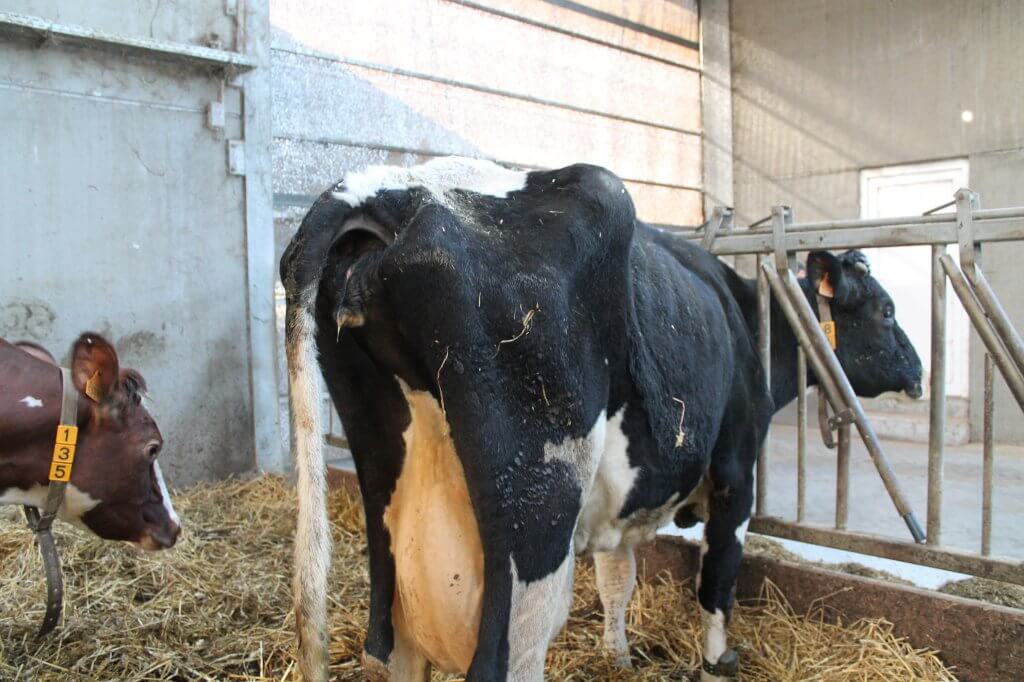
It is a common ailment in dairy cattle: ketosis, also referred to as acetonemia. Research has shown that in the first two…
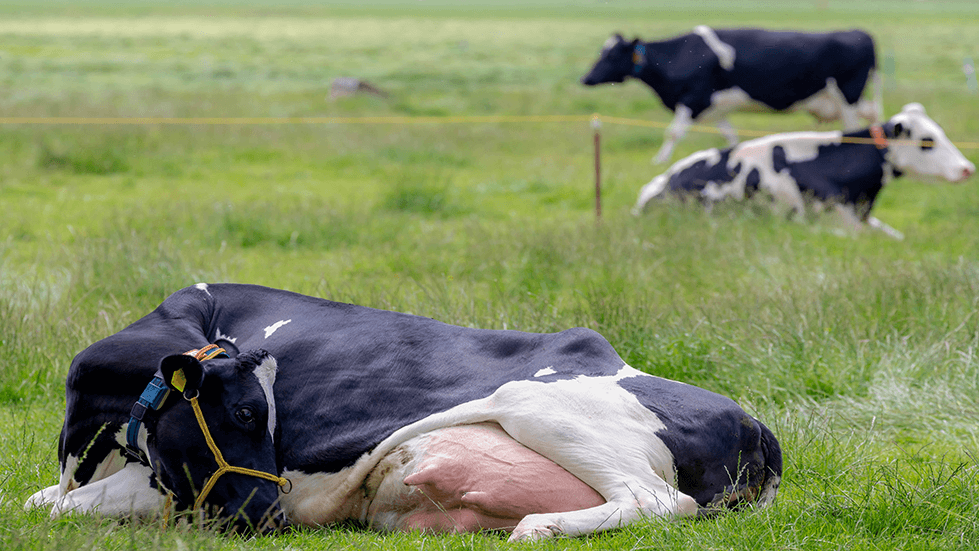
Ketosis and milk fever sound alike, but they are 2 different conditions that cows can develop around calving. Milk fever is a…
Discover our new magazine “Farming Forward”, formerly known as “Cow Programme”. We have also added topics such as hoof care, hygiene and daily farm supplies.
Read the magazine

Cart

Your cart is empty.