
 EN
EN  NL
NL 

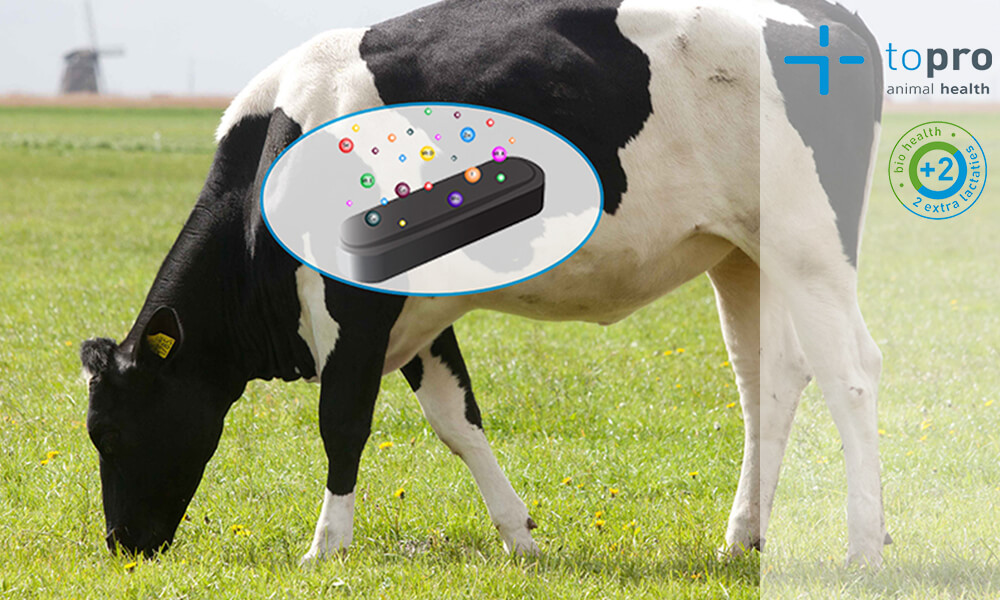
Modern grassland is on average short of essential trace elements such as copper, selenium and cobalt. The uptake of trace elements also depends on the soil type. On peat and sandy soils, for example, copper and selenium are absorbed less easily because of higher levels of sulphur and iron. To avoid risks to the health and growth of your animals during the grazing season, it is wise to top up trace elements.
The requirements for the most important minerals for young stock are listed in table 1. These requirements depend on growth rate and body weight.
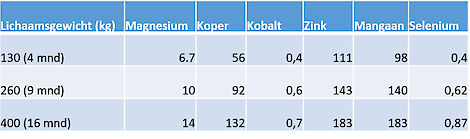
Table 1: Average requirement standards for trace elements in young stock (mg/animal/day)
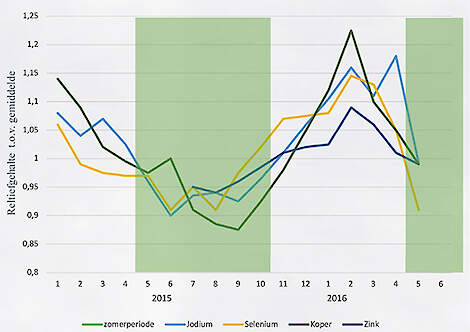
Analyses by GD (Royal GD animal health service) show that trace element levels in the blood drop during the summer period, when cows are often outside (see figure 1). Animals at pasture eat less of the barn ration and therefore take in fewer trace elements.
Using a bolus has several advantages. A bolus makes it possible to treat animals individually. You can also be sure of the intake and do not depend on whether the animal eats from a bucket or on its appetite. A good mineral balance will keep your young stock and grazing cattle fit, and it also has a positive effect on the animal’s fertility and, for example, on the unborn calf. In general we can say that health status improves when the mineral balance is in order!
A mineral bolus is practical and effective for young stock and grazing cattle. Giving a bolus before your animals go out to pasture is often enough to cover the requirement for all essential trace elements. Trials show that young stock still have good mineral levels in the blood six months after receiving a bolus. Young stock that had not received a bolus showed lower levels.


