
 EN
EN  NL
NL 

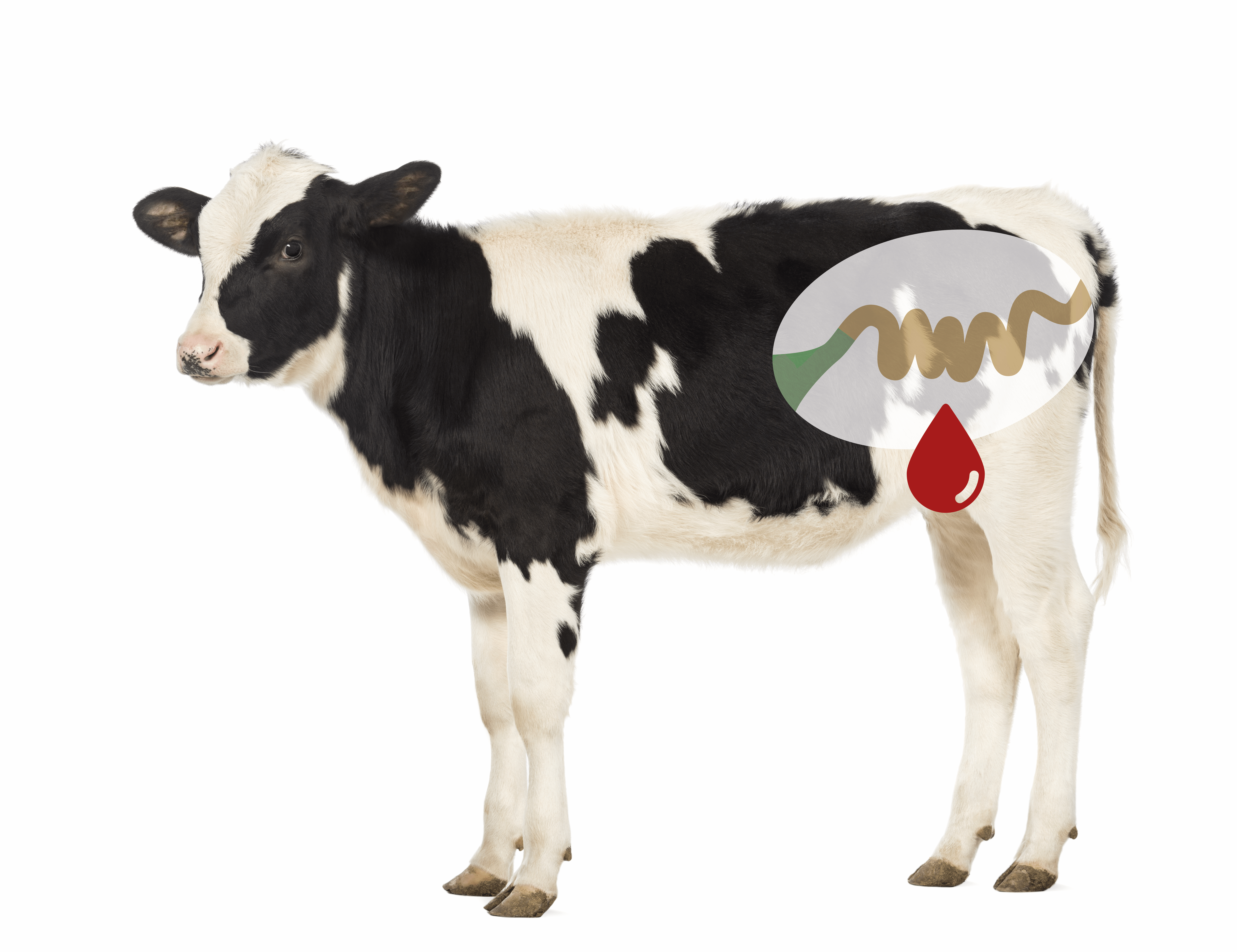
Many calves face some form of diarrhoea in their first weeks of life. This can be nutritional diarrhoea, but diarrhoea can also be caused by viruses, bacteria, parasites and fungi. These enter the body through the mouth and can cause inflammation of the gut wall. Because of the inflammation, the gut wall absorbs less fluid and the faeces become loose. Some bacteria (such as E. coli) and fungi produce toxins that make the calf ill.
Keeping the calf healthy is largely a matter of keeping the gut healthy. An imbalance in the digestive tract can lead to ‘leaky gut’. What does that mean?
Tight junctions
The wall of the small and large intestine consists of a single, thin layer of cells that separates the digesta in the gut from the bloodstream. Nutrients are taken up by these gut cells and passed on to the blood. Some nutrients and fluid pass through small channels between the gut cells. These channels contain special proteins that work like small muscles, the so-called ‘tight junctions’. They control the opening and closing of the channels. When the tight junctions lose their function, they let through not only the useful substances, but also unwanted substances, bacteria and toxins that can cause inflammatory reactions further in the body. This is what we call a leaky gut.

A leaky gut develops when the balance in the gut (gut environment) is disturbed, see the diagram above.
This can be caused by:
- Endotoxins and mycotoxins, toxins produced by bacteria and fungi respectively
- Acidification of the gut, often related to feeding
- Use of antibiotics. Broad-spectrum antibiotics also kill the good bacteria.
- Parasites that damage gut cells (Cryptosporidium parvum, Eimeria species that cause coccidiosis)
- Shortage of minerals, such as zinc (Zn)
- Shortage of antioxidants (for example vitamin E due to poor colostrum quality from dry period feeding)
5-step plan
Knowing the main causes of leaky gut makes it easier to keep the calves’ gut healthy. To reduce the risk of leaky gut, you can look at:
- Dry period feeding: Make sure the calf has good resistance from the start through the feeding of the dam in the dry period. Vitamin E as an antioxidant and trace elements (Zn) are linked to colostrum and can be influenced by dry period feeding
- Colostrum: The amount and the quality (IgGs and hygiene) matter. The newborn calf’s first feed must take place within 1 hour of birth and must be 4 L of colostrum with a minimum Brix value of 23%.
- Hygiene: Work hygienically around calving and in housing to prevent infection with pathogens.
- Feeding: Use first-class cow’s milk or milk replacer to reach high daily growth. Average daily growth in the milk feeding period should be above 850 g per day. This matters to get more of the calf’s genetic potential out.
- Work preventively: Prevention is better than cure is an old saying, and a true one. Supporting the calf and the gut environment preventively can avoid a lot of misery.
Effective products to use preventively are:
-
- Dry mineral bolus. Provides extra trace elements and vitamins to the cow and the unborn calf.
- Colostrum mix. A colostrum powder to supplement colostrum when its IgG content is too low. (free of IBR and BVD)
- DiarFix. A powder that can be fed through the milk and stabilises the gut environment.
- Crypto bolus. A bolus to improve the calf’s overall resistance.
- CarboGel. A gel that can bind harmful toxins from bacteria and fungi so the calf does not suffer from them.
- Opti Boost calf bolus. Adds essential trace elements and vitamins.


