 EN
 NL
Guide · Calves
Navel care in calves: how to keep the navel clean and dry
A newborn calf has an open navel. Here is how to care for it in a few minutes: a clean calving area,…


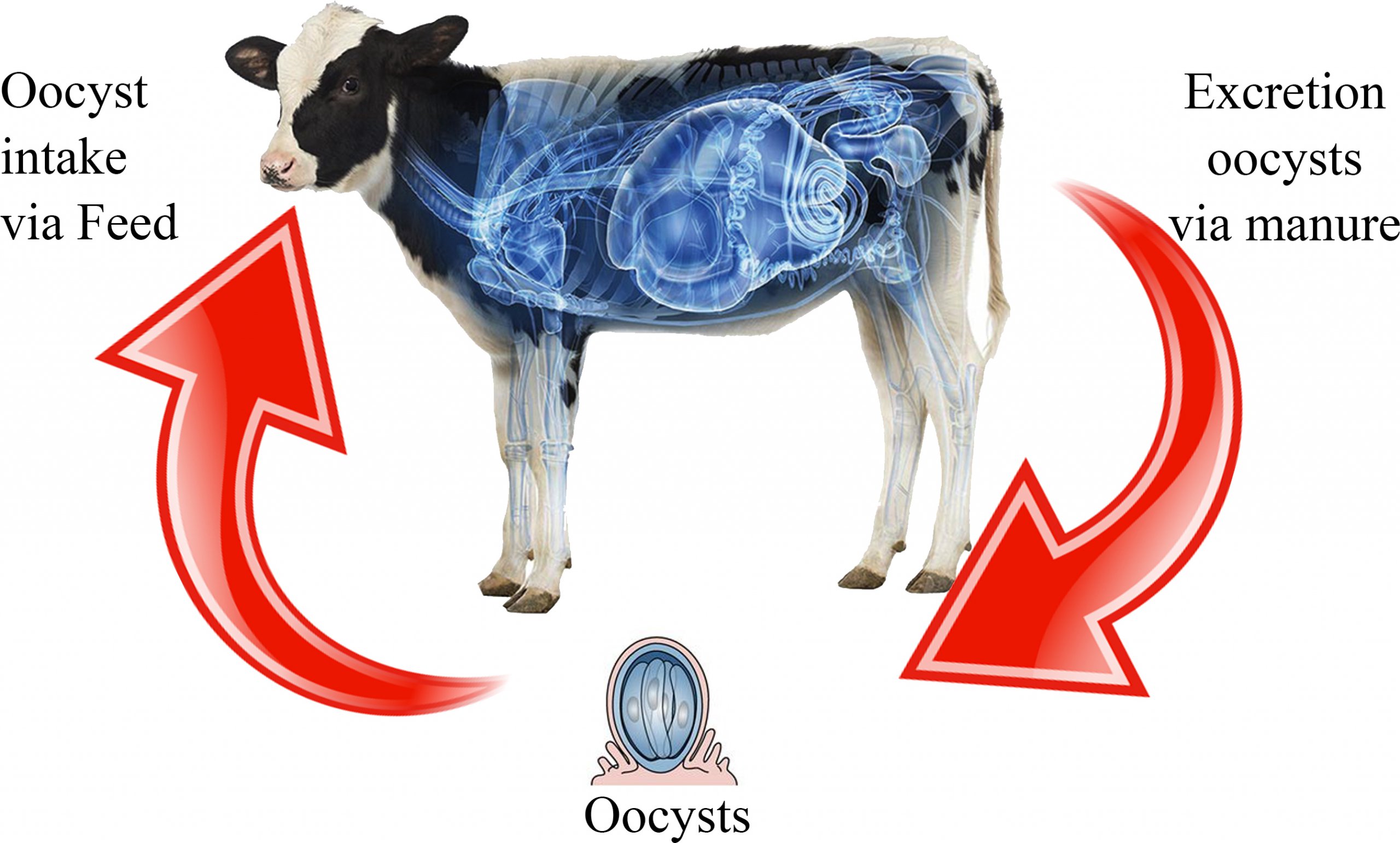
Cryptosporidiosis is caused by Cryptosporidium spp. The most common type is C. parvum. Dutch research (2007) has shown that Cryptosporidium parvum is present on 57% of Dutch farms. Other research revealed that Cryptosporidia are involved in 60% of the cases of diarrhoea.
Cryptosporidiosis is a frequently occurring health issue, in which the infectious pressure can increase rapidly. Calves may be infected through manure, e.g., shortly after birth.
The most important symptom is a watery, custard-like, yellow-green diarrhoea, in which slime and blood may be found. Other indications include lethargy, bad appetite, weight loss, and dehydration.
Symptoms are worse when C. parvum coincides with other pathogens, like corona or rota viruses or E. coli, but severe symptoms may also occur in cases where only Cryptosporidium is present. The parasite attaches to the villi in the gut, causing these villi to die, which leads to inflammatory reactions and loss of enzyme activity. The damaged villi open the gate for a secondary infection (gate-way effect). Another consequence is shortening of villi and decreased uptake of nutrients, such as Vitamin A. Cryptosporidium parvum infections mostly occur in calves between one and four weeks of age. Although Cryptosporidiosis seldom leads to the death of the calf, growth retardation is very common, and this negatively impacts future production performance. Many factors influence the origin of Cryptosporidiosis, with bad hygiene being an important one.

A prevention programme to prevent or reduce Crypto should be aimed at increasing the immune status, combined with lowering the infectious pressure.
The circumstances may vary greatly between farms. In general:
Avoid stress with your calves:
A newborn calf has an open navel. Here is how to care for it in a few minutes: a clean calving area,…
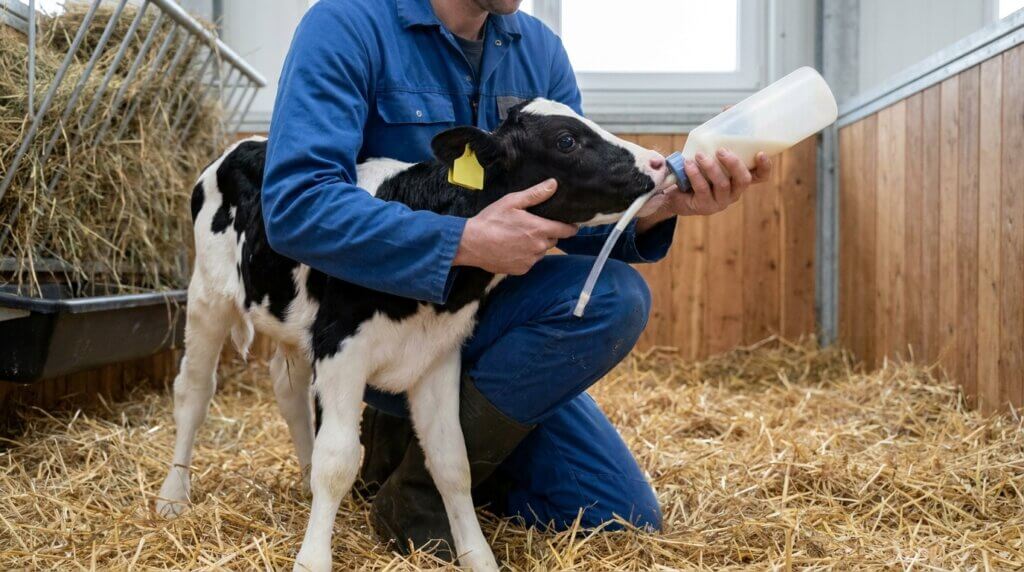
If a newborn calf does not drink well, a feeding tube helps it get colostrum in time. Here is how to do…

Choosing the right teats for your calves can be complicated. After all, there are so many teats and systems on the market!…
Discover our new magazine “Farming Forward”, formerly known as “Cow Programme”. We have also added topics such as hoof care, hygiene and daily farm supplies.
Read the magazine

Cart

Your cart is empty.