
 EN
EN  NL
NL 

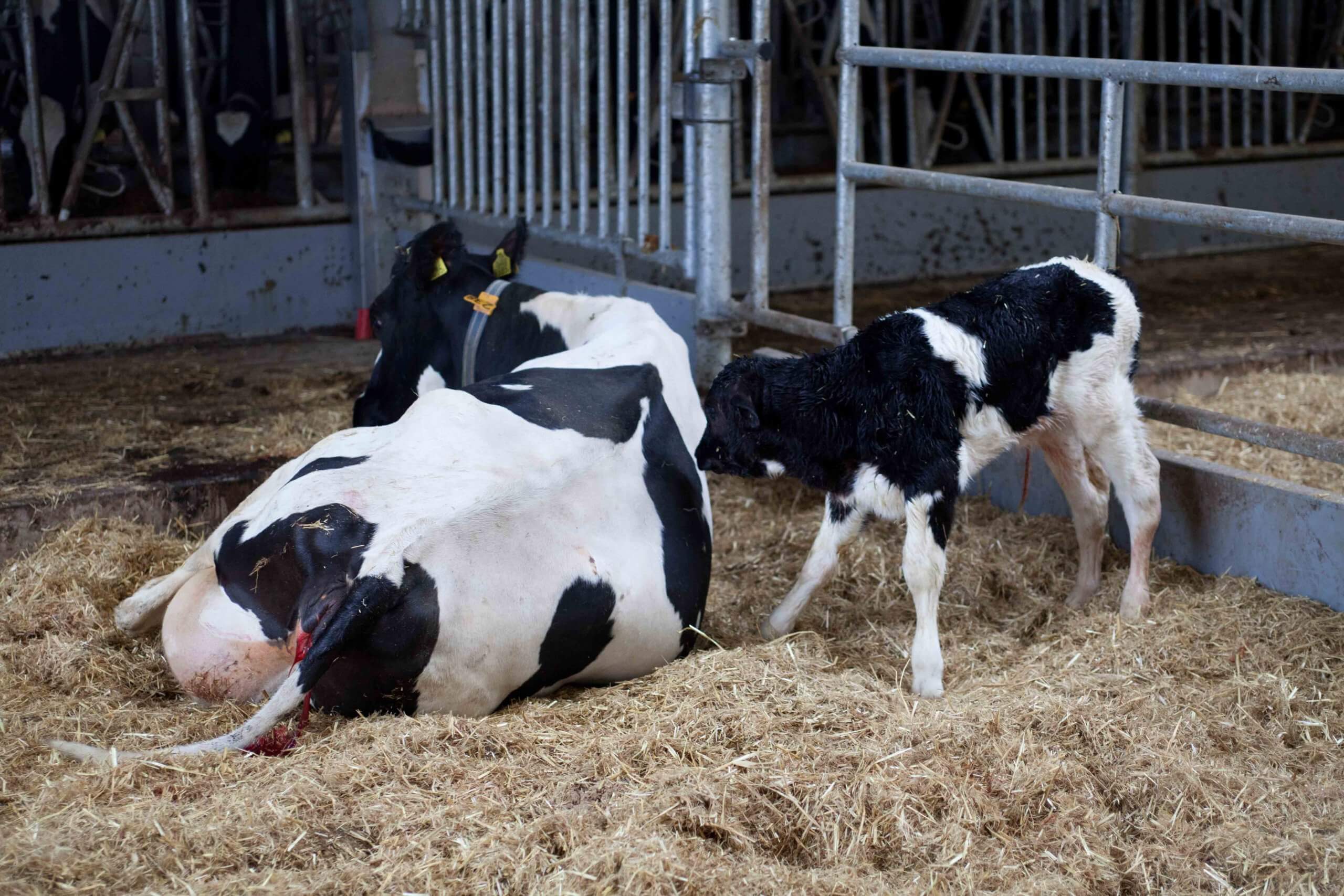
Phosphorus deficiency and calcium deficiency: what is the difference?
Phosphorus deficiency is becoming more common in dairy cows around calving. Even so, little is known about it yet. Because the cow cannot stand, or has trouble standing, people often think she is short of calcium rather than phosphorus. But there is a difference between a calcium deficiency and a phosphorus deficiency! So it makes sense to give the cow extra phosphorus as well as calcium.
Phosphorus plays a part in many places in the cow’s body. It is involved in energy metabolism, it is one of the building blocks of cell membranes and it is an important nutrient for rumen microbes. In fresh cows, its main function is muscle contraction. A shortage of phosphorus therefore leads to muscle weakness, so the cow has trouble getting to her feet after calving. Cows with a phosphorus deficiency are often described as “downer cows”.
Phosphorus deficiency due to low feed intake
Like calcium, phosphorus is mostly stored in the skeleton. Around calving, the cow loses phosphorus to the growth of the foetus and the start of milk production. Cows can draw some phosphorus from the skeleton, but most of it simply has to come from the feed. If feed intake drops around calving, a phosphorus deficiency can easily develop.
In recent years, rations have become lower in phosphorus, so dairy cows can develop a phosphorus deficiency more quickly. There are several reasons for this:
- Less phosphate is spread on the land because of phosphate excretion and the risk of leaching. The dry years have also made forage poorer, which has reduced the phosphorus content of forage as well.
- Because of environmental requirements, less phosphorus is added to concentrates. The aim is to improve phosphate efficiency in the cow and lower the phosphate content of the manure.
- Dry cow rations contain fewer and fewer nutrients. To reduce the risk of milk fever, the cation-anion balance of the dry cow ration has to be right. Phosphorus inhibits the activation of vitamin D, which reduces bone mobilisation and increases the risk of milk fever. Still, phosphorus is very important for cows in late pregnancy.
Combined with a calcium deficiency
In practice, we almost always see a phosphorus deficiency combined with a calcium deficiency. These problems often go “hand in hand”, but each has its own cause. While phosphorus has to come from the feed, the calcium around calving has to be released through bone mobilisation. With a calcium deficiency, the rumen also works less well because the rumen (muscle) receives less calcium. Feed intake drops even further, and so does phosphorus intake.
The clinical signs of phosphorus deficiency and milk fever are very similar. The table below sets out the symptoms of calcium deficiency and phosphorus deficiency side by side. To know for sure which deficiency it is, a blood sample taken by the vet can help.
| Symptoms of calcium deficiency | Symptoms of phosphorus deficiency |
| Unable to stand | (Just) unable to stand |
| Cold ears | No cold ears (any more) |
| Not wanting to eat | Eating moderately |
| Dull | Relatively alert |
| Normal urine | Possibly reddish urine |
Treatment
Unlike calcium, phosphorus unfortunately does not respond quickly to treatment. Injectable phosphorus does raise the phosphorus level in the blood quickly, but this phosphorus disappears fast and is hardly taken up into the cells, if at all. A better method is to give phosphorus orally (by mouth). The Topro Phosphorus bolus is a fast-dissolving phosphorus and calcium supplement that can be given just before and shortly after calving. If the fresh cows are already receiving calcium supplements, the Topro Calcium bolus is also suitable. As well as calcium and vitamin D3, this bolus contains phosphorus, so the deficiency can be made up quickly. Supporting the cow with a comfortable place to lie down and pain relief is also important to get her back on her feet quickly.
Want to know more about calcium deficiency in fresh cows? Read more here.


